Introduction
When many people think of the Yoruba, they immediately think of southwestern Nigeria. Yet Yoruba civilisation has never been confined to the borders of modern Nigeria. Long before European colonial powers divided West Africa into separate territories, Yoruba-speaking peoples had already established thriving communities across what is now the Benin.
Today, hundreds of thousands of Yoruba people live in Benin Republic. They have preserved their language, traditional institutions, festivals, and religious practices while also developing identities shaped by their unique historical experiences.
Their story is a reminder that Yorubaland has always been larger than the borders created during the colonial era.
Before Colonial Borders
Before the nineteenth century, there was no Nigeria or Benin Republic as we know them today.
The people who moved across these regions travelled freely through forests, savannahs, and trade routes. Kingdoms rose and fell, and communities interacted through:
* Trade * Intermarriage * Diplomacy * Religious exchange * Migration
As a result, many Yoruba settlements emerged west of present-day Nigeria.
When France later established colonial rule over Dahomey, which became modern Benin Republic, these Yoruba communities found themselves separated from their relatives by newly imposed international boundaries.
Despite this, they maintained strong cultural ties to the wider Yoruba world.
The Kétu Kingdom
One of the most important Yoruba communities in Benin Republic is Kétu.
The Kétu Kingdom is regarded as one of the oldest Yoruba kingdoms outside present-day Nigeria.
Origins
According to Yoruba oral traditions, Kétu traces its origins to migrations from Ile-Ife, the spiritual cradle of Yoruba civilisation.
Its rulers are believed to descend from lineages connected to Oduduwa.
Historical Importance
Kétu became:
* A major political centre * An important commercial hub * A link between inland and coastal trade networks * A guardian of Yoruba traditions beyond Nigeria
For centuries, Kétu maintained close interactions with neighbouring kingdoms and communities.
Porto-Novo and Yoruba Influence
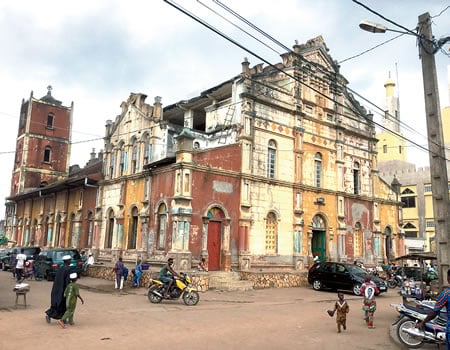
The city of Porto-Novo, Benin Republic's official capital, also has a significant Yoruba presence.
Historically, Yoruba migrants settled in Porto-Novo through trade and political alliances.
The city developed into a multicultural centre influenced by:
* Yoruba traditions * Goun culture * French colonial administration * Afro-Brazilian returnees
Today, Yoruba remains one of the languages spoken in and around Porto-Novo.
The city's diverse heritage reflects centuries of cultural interaction.
Sàbẹ́ and Other Yoruba Communities
Beyond Kétu and Porto-Novo, Yoruba communities are found throughout Benin Republic.
These include areas associated with:
* Sàbẹ́ * Ifonyin * Sakété * Nikki and surrounding settlements * Various border communities
Each community possesses its own local traditions while maintaining broader Yoruba cultural foundations.
Some preserve ancient royal institutions, while others developed through commercial migration.
Together, they form an important part of Benin's ethnic diversity.
Language and Dialects
Yoruba communities in Benin Republic speak various dialects of the Yoruba language.
These dialects often share strong similarities with those spoken in neighbouring Nigerian communities.
However, centuries of interaction with other ethnic groups and the influence of French as Benin's official language have shaped linguistic practices.
Many Yoruba people in Benin are multilingual, speaking combinations of:
* Yoruba * French * Local languages such as Goun and Fon
Despite these influences, the Yoruba language remains an important marker of identity.
Religion and Spiritual Traditions
Religion among Yoruba communities in Benin Republic reflects both continuity and diversity.
Traditional practices remain vibrant in many areas.
These include:
* Worship of Òrìṣà * Consultation of Ifá divination * Ancestor veneration * Seasonal festivals and rituals
At the same time, many Yoruba in Benin identify as:
* Christians * Muslims
Rather than replacing older traditions entirely, these faiths often coexist alongside indigenous practices.
This religious diversity mirrors broader Yoruba experiences across West Africa.
Trade and Economic Life
Commerce has long played a central role in Yoruba communities in Benin Republic.
Historically, Yoruba traders facilitated the movement of goods across regional networks.
Items traded included:
* Kola nuts * Textiles * Agricultural produce * Palm products * Livestock * Crafted goods
Today, cross-border trade between Benin and Nigeria remains economically significant.
Many families maintain commercial relationships that span both countries.
These connections reinforce social ties that predate colonial boundaries.
Festivals and Cultural Preservation
Festivals continue to play a vital role in preserving identity.
These celebrations provide opportunities to transmit cultural knowledge to younger generations through:
* Music and drumming * Dance performances * Storytelling * Praise poetry * Traditional attire * Ritual observances
They also strengthen community bonds and reaffirm connections to ancestral heritage.
Even in rapidly changing societies, festivals remain powerful expressions of belonging.
The Impact of Colonialism
French colonial rule introduced profound changes to Yoruba communities in Dahomey.
Colonial administration:
* Established new political boundaries * Promoted French-language education * Restructured governance systems * Altered trade patterns
Yet these policies did not erase Yoruba identity.
Families continued to visit relatives across borders.
Traditional rulers retained cultural influence.
Communities adapted while preserving their heritage.
The resilience of these communities demonstrates the enduring strength of Yoruba civilisation.
Yoruba Identity in Modern Benin Republic
Today, Yoruba communities remain an integral part of Benin Republic's social and cultural landscape.
They contribute to national life as:
* Farmers * Traders * Educators * Civil servants * Religious leaders * Artists and entrepreneurs
At the same time, many continue to cherish their Yoruba heritage through language, festivals, and community institutions.
Their identity is both Beninese and Yoruba.
These two realities coexist rather than contradict one another.
Conclusion
The story of Yoruba communities in Benin Republic reminds us that culture does not always follow political borders.
Long before the creation of modern states, Yoruba-speaking peoples had already built kingdoms, established trade networks, and nurtured traditions across the region.
From the ancient kingdom of Kétu to the bustling streets of Porto-Novo, these communities have preserved their heritage while adapting to changing historical circumstances.
Their experience reflects the wider Yoruba story: one of migration, resilience, cultural continuity, and renewal.
Across Benin Republic, the Yoruba language still echoes in marketplaces and family compounds. Traditional festivals continue to bring communities together. Ancient memories remain alive in oral histories and royal institutions.
They stand as living proof that Yoruba civilisation has always been broader, richer, and more interconnected than the boundaries drawn on modern maps.