Introduction
When discussions about the Yoruba people arise, attention is often focused on Nigeria and, to a lesser extent, neighbouring Benin Republic. Yet beyond these well-known centres of Yoruba civilisation lie communities whose stories are less frequently told.
Among them are the Yoruba communities of Togo.
Although they represent a smaller population compared to their counterparts in Nigeria and Benin, the Yoruba of Togo have maintained their language, customs, and cultural identity for generations. Their history reflects the wider Yoruba experience of migration, adaptation, and resilience.
It is also a reminder that Yorubaland has always extended beyond modern political boundaries.
Before the Borders Existed
Before European colonial powers partitioned West Africa in the late nineteenth century, people moved freely across the region.
There were no immigration checkpoints or international passports.
Communities expanded through:
* Trade * Marriage * Agricultural settlement * Religious activities * Political alliances
As Yoruba-speaking populations spread westward into areas that now form Benin Republic, some eventually settled further into territories that became modern Togo.
When colonial borders were later established by France and Germany, these communities suddenly found themselves citizens of new states without ever leaving their ancestral lands.
How the Yoruba Came to Togo
The Yoruba presence in Togo developed gradually over centuries rather than through a single mass migration.
Several factors contributed to this movement.
Trade Networks
Yoruba merchants travelled extensively throughout West Africa, carrying goods and establishing commercial relationships.
Many settled permanently in trading centres.
Family Migration
Relatives joined earlier migrants, creating stable communities that grew over time.
Agricultural Expansion
Farmers sought fertile land suitable for cultivation and established villages in border regions.
Religious and Social Connections
Priests, diviners, artisans, and travellers often relocated while maintaining ties with their places of origin.
These overlapping movements gradually produced enduring Yoruba communities within Togo.
Where Yoruba Communities Are Found in Togo
Most Yoruba communities in Togo are concentrated in the southern and eastern parts of the country, particularly near the border with Benin Republic.
These settlements developed through centuries of interaction among neighbouring populations.
In many cases, Yoruba families live alongside Ewe, Mina, Adja, and other ethnic groups.
The result is a multicultural environment where identities overlap without necessarily disappearing.
Many Togolese Yoruba maintain relationships with relatives in Benin Republic and Nigeria, creating cross-border family networks that continue to this day.
Language and Identity
Language remains one of the strongest markers of Yoruba identity in Togo.
Many Yoruba families continue to speak Yoruba at home while also using other languages in public life.
Depending on location, Togolese Yoruba may speak:
* Yoruba * French * Ewe * Mina * Other local languages
This multilingual ability reflects adaptability rather than cultural loss.
For many people, speaking Yoruba provides a direct link to ancestry, proverbs, oral traditions, and family history.
However, as younger generations increasingly receive formal education in French, language preservation has become an important concern within some communities.
Religion and Spiritual Life
The religious life of Yoruba communities in Togo is remarkably diverse.
Traditional beliefs remain important in some families and communities.
These practices include:
* Reverence for ancestors * Consultation of Ifá divination * Observance of traditional rituals * Respect for sacred customs
At the same time, many Togolese Yoruba identify as Christians or Muslims.
As elsewhere in Yorubaland, religious identities often coexist with cultural traditions.
A family may attend church or mosque while continuing to value Yoruba naming customs, festivals, and ancestral memories.
Trade and Economic Contributions
Trade has historically been one of the defining characteristics of Yoruba migration.
Yoruba communities in Togo have contributed to local economies through:
* Market trading * Agriculture * Small businesses * Cross-border commerce * Craftsmanship
Their commercial activities strengthened economic links among Togo, Benin Republic, and Nigeria.
Even today, regional trade remains an important aspect of daily life for many families.
These economic connections reinforce cultural relationships that extend beyond national borders.
Festivals and Cultural Preservation
Festivals serve as powerful expressions of identity.
They allow communities to celebrate heritage while teaching younger generations about their roots.
Such gatherings often feature:
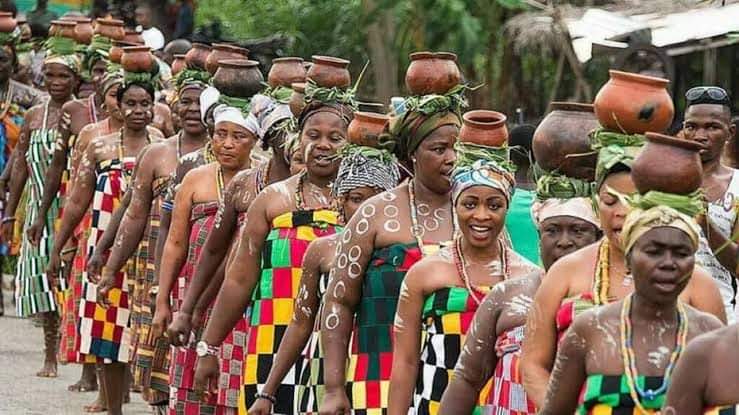
* Traditional drumming * Dance performances * Indigenous attire * Oral storytelling * Naming ceremonies * Family reunions
These events reinforce a sense of belonging and continuity.
Even when adapted to local contexts, they preserve essential elements of Yoruba culture.
Living Between Multiple Worlds
One of the most fascinating aspects of Yoruba communities in Togo is their ability to navigate multiple identities.
A person may simultaneously identify as:
* Togolese * Yoruba * Francophone * Christian or Muslim * A member of a particular local community
These identities are not necessarily contradictory.
Instead, they reflect the complexity of life in West Africa, where cultural boundaries have long been fluid and interconnected.
Being Yoruba in Togo often means honouring ancestral heritage while participating fully in the national life of the country.
Challenges Facing Yoruba Communities in Togo
Like many minority communities around the world, Togolese Yoruba face challenges related to cultural preservation.
These include:
* Declining use of Yoruba among younger generations * Urbanisation and migration * The dominance of French in formal education * Globalisation and changing lifestyles
Despite these pressures, families, cultural associations, and community elders continue to promote Yoruba traditions through education, festivals, and oral transmission.
Their efforts demonstrate a commitment to ensuring that future generations remain connected to their heritage.
Conclusion
The story of Yoruba communities in Togo is one of quiet endurance.
Though smaller in number than Yoruba populations in Nigeria and Benin Republic, they represent an important chapter in the wider history of Yoruba civilisation.
Their presence reminds us that African cultures have always crossed borders, interacted with neighbours, and adapted to changing realities.
Through trade, migration, family ties, and cultural resilience, Yoruba communities in Togo have preserved a sense of identity that stretches back centuries.
Today, in villages and towns across Togo, the Yoruba language is still spoken, ancestral memories are still honoured, and traditional values continue to shape community life.
Their story is not merely one of survival.
It is a testament to the enduring strength of a people who have carried their heritage across landscapes and generations, ensuring that the spirit of Yoruba civilisation continues to flourish far beyond the boundaries of its ancient homeland.