Introduction
Across the Atlantic, far from the forests and cities of southwestern Nigeria, Yoruba culture took root in a new land and transformed into something both familiar and distinct. In Cuba, this heritage lives on through the Lucumí tradition and the religion widely known as Santería.
What began under the harsh conditions of enslavement evolved into a resilient spiritual system, preserving Yoruba beliefs, language fragments, music, and identity in the Caribbean. Today, it stands as one of the most powerful examples of cultural survival and adaptation in the African diaspora.
From Yorubaland to Cuba
During the transatlantic slave trade, thousands of Yoruba people were taken from regions that are now part of Nigeria, Benin, and Togo to the Caribbean, including Cuba.
In Cuba, they came to be referred to as Lucumí, a term believed to have originated from a greeting or linguistic expression among the Yoruba. Though separated from their homeland, they carried with them their worldview, spiritual practices, and cultural memory.
Under colonial rule, enslaved Africans were often forced to adopt Catholicism. However, rather than abandon their beliefs, Yoruba descendants adapted creatively, blending traditions in ways that allowed them to survive.
The Birth of Santería
Out of this cultural blending emerged Santería, also known as Regla de Ocha.
Santería is rooted in Yoruba spirituality but incorporates elements of Catholic symbolism. This blending, often called syncretism, allowed practitioners to continue honoring their deities while outwardly appearing to follow Catholic practices.
For example, Yoruba orishas were associated with Catholic saints. This was not a replacement, but a strategic alignment that preserved deeper meanings beneath the surface.
Santería became both a spiritual system and a form of quiet resistance, protecting identity in a restrictive environment.
The Orishas in the Cuban Context
Central to Santería are the orishas, spiritual forces that govern different aspects of life. These are directly inherited from Yoruba belief systems, though their expressions have evolved in Cuba.
Some of the most revered include:
* Elegua — guardian of crossroads and beginnings * Yemaya — associated with the ocean and motherhood * Shango — symbol of power, justice, and energy * Oshun — representing beauty, fertility, and sweetness
Devotees build altars, offer food and gifts, and perform rituals to maintain a relationship with these forces. Though the setting has changed, the spiritual essence remains deeply Yoruba.
Language, Music, and Ritual
One of the most remarkable aspects of the Lucumí tradition is the preservation of language and sound.
A ritual language derived from Yoruba, often called Lucumí, is still used in prayers, chants, and ceremonies. While it is no longer identical to modern Yoruba, it carries recognizable structures and meanings.
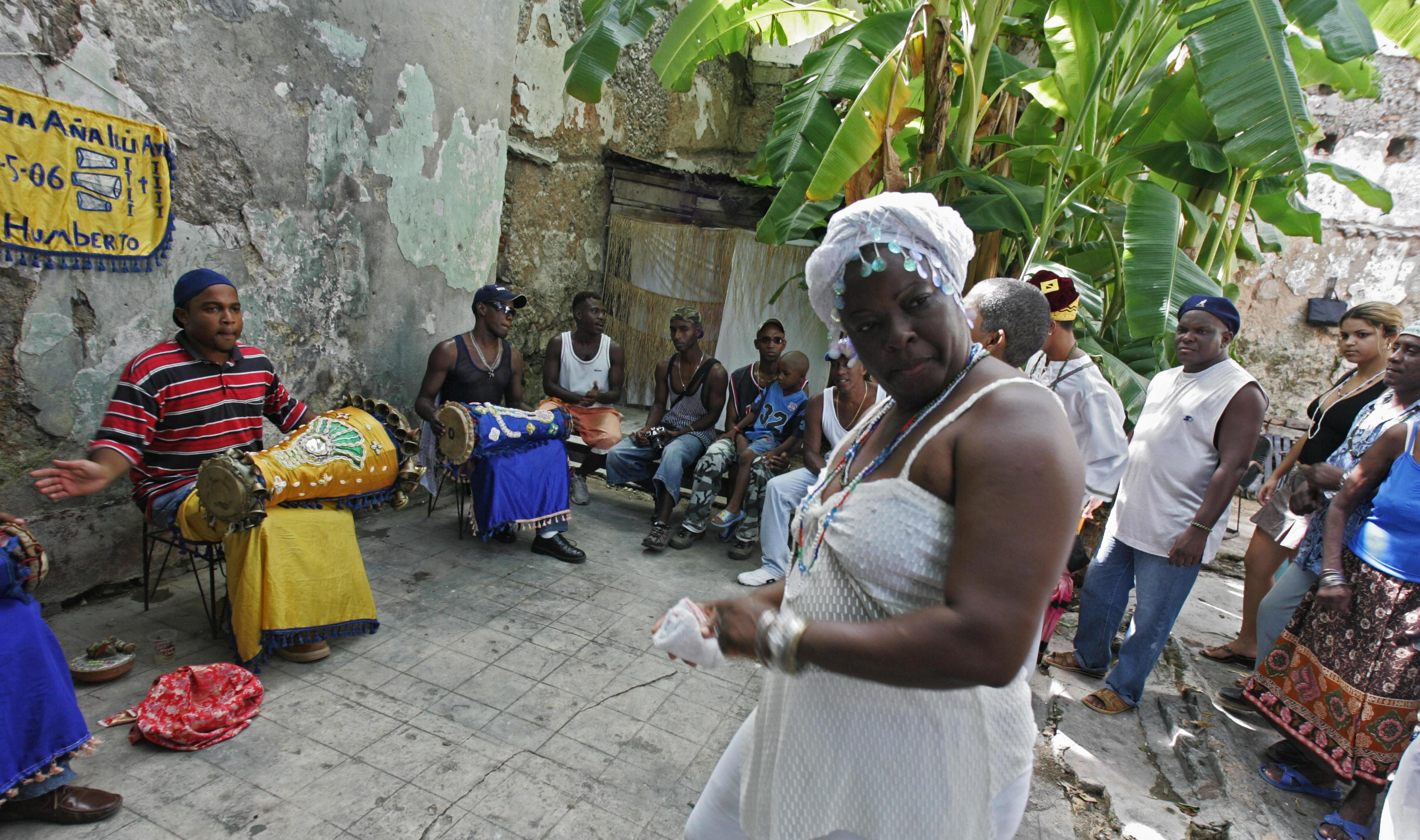
Music plays a central role. The sacred batá drums are used to communicate with the orishas, each rhythm carefully structured and deeply symbolic. Dance, too, becomes a form of storytelling, with movements representing the qualities and histories of different orishas.
In these moments, the past and present meet, and Yoruba heritage comes alive in Cuban soil.
Identity, Resistance, and Survival
The Lucumí and Santería traditions are not just religious practices. They are expressions of identity and resilience.
In a context where African cultures were suppressed, these traditions became a way to preserve dignity, memory, and connection to ancestry. They offered a sense of belonging and continuity in an unfamiliar world.
Even today, they continue to shape Afro-Cuban identity, influencing music, art, and social life.
Global Influence and Modern Presence
Today, Santería has spread beyond Cuba to countries like the United States, Mexico, and parts of Europe. It has also influenced global music, particularly in jazz, Latin, and Afro-fusion genres.
At the same time, there is growing interest in reconnecting these diaspora traditions with their Yoruba roots in West Africa. Cultural exchange, research, and travel have strengthened these links, creating a dynamic conversation between past and present.
Conclusion
The story of the Yoruba in Cuba is a story of transformation without loss. Through the Lucumí and Santería tradition, a displaced people preserved their worldview, adapted to new realities, and created something enduring.
It is a reminder that culture is not easily erased. It evolves, it adapts, and it survives.
From the shores of West Africa to the streets of Havana, the spirit of Yoruba identity continues to live, not as a memory, but as a living, breathing tradition.