Introduction
The Yoruba influence on the Caribbean is one of the most remarkable stories of African cultural survival in the Atlantic world. During the transatlantic slave trade, many people from Yoruba speaking regions of present day Nigeria and neighbouring areas were forcibly taken to the Caribbean. Despite the violence and disruption of slavery, elements of Yoruba language, religion, music and cultural expression survived and developed in new environments.
Today, Yoruba influence can still be found in the languages and ritual vocabularies of countries such as Cuba, Trinidad and Tobago, Brazil's Caribbean connected Atlantic world, and other parts of the Americas. However, this influence must be understood carefully. In many places, Yoruba did not simply survive as an everyday spoken language. Instead, Yoruba words and linguistic structures became part of religious languages, ceremonial vocabulary, songs, names and Afro Caribbean cultural traditions.
Yoruba Across the Atlantic
The forced movement of African peoples created communities in which people from different ethnic and linguistic backgrounds had to live together.
Yoruba speakers encountered people who spoke:
* Other West African languages. * European colonial languages. * Creole languages. * Indigenous Caribbean languages.
As a result, Yoruba influence often became mixed with other African traditions.
This means that Caribbean cultural expressions cannot always be described as purely Yoruba. They are frequently the result of multiple African and Caribbean histories interacting over generations.
Lucumí and Yoruba in Cuba
One of the strongest linguistic connections appears in Cuba through Lucumí, a ritual language closely connected to Yoruba.
Lucumí developed among descendants of Yoruba speaking peoples and became especially important within religious traditions commonly known as Regla de Ocha or Santería.
Many Lucumí words have clear connections to Yoruba vocabulary, particularly in:
* Names of Òrìṣà. * Songs. * Prayers. * Ritual expressions. * Praise language. * Ceremonial speech.
However, Lucumí is not simply identical to modern standard Yoruba. It developed separately in Cuba and preserves older forms and pronunciations while also reflecting the historical experiences of the Afro Cuban community.
The Names of the Òrìṣà Survived
Perhaps the most visible Yoruba influence is found in the names of Yoruba deities and spiritual figures.
Across Caribbean and Afro Atlantic traditions, names connected to Yoruba traditions include:
* Ṣàngó * Ọ̀ṣun * Yemoja * Ọbàtálá * Èṣù * Ọ̀rúnmìlà
Their names may be pronounced or written differently depending on the country and religious tradition.
For example, Ṣàngó may appear as Changó in Spanish speaking environments, reflecting Spanish spelling and pronunciation.
This shows how Yoruba vocabulary adapted to new linguistic environments while retaining recognisable cultural roots.
Yoruba Words in Caribbean Religious Vocabulary
Yoruba influence is particularly strong in the specialised vocabulary of religious traditions.
Words relating to:
* Spiritual beings. * Ritual objects. * Divination. * Music. * Ceremonies. * Praise. * Sacred spaces.
have survived in different forms.
These words are important because religious practice provided a space where African languages could continue to be spoken, sung and remembered even when colonial societies discouraged or suppressed African cultural traditions.
Songs and ceremonies became archives of language.
Trinidad and Tobago: The Orisha Tradition
In Trinidad and Tobago, Yoruba derived religious traditions became part of the development of the Orisha tradition.
The Yoruba influence can be seen in:
* The names of spiritual beings. * Songs and chants. * Ceremonial vocabulary. * Drumming traditions. * Religious concepts.
Over generations, these traditions interacted with Christianity and other African religious systems.
The result was a distinctly Trinidadian cultural tradition that preserved Yoruba roots while developing its own identity.
This is an important lesson about cultural survival:
A tradition can change and still retain a connection to its origins.
Yoruba Influence and Caribbean Creole Languages
Yoruba influence on everyday Caribbean Creole languages is more difficult to identify than its influence on religious vocabulary.
Caribbean languages developed through contact between European colonial languages, African languages and local communities.
Therefore, many words that appear African may not necessarily come from Yoruba alone.
Linguists must compare vocabulary carefully before claiming a Yoruba origin.
Nevertheless, African languages, including Yoruba, contributed to the wider linguistic environment from which Caribbean Creoles developed.
Their influence may appear through:
* Individual loanwords. * Personal names. * Religious terminology. * Songs. * Expressions. * Patterns of oral performance.
The strongest and most easily documented Yoruba influence generally survives in religious and cultural language, rather than in the complete grammar of everyday Caribbean English or Spanish Creoles.
Music Helped Preserve Language
Music played an enormous role in preserving Yoruba linguistic heritage.
In Yoruba culture, language and music have a close relationship because Yoruba is a tonal language.
Across the Atlantic, drumming and singing helped preserve:
* Names. * Praise expressions. * Sacred vocabulary. * Stories. * Rhythmic speech patterns.
The Bàtá drum tradition, which has Yoruba origins, became particularly important in Cuba.
Through music, generations could learn sounds and words connected to Yoruba heritage even when they no longer spoke Yoruba as an everyday language.
Yoruba Names in the Caribbean
Personal and ceremonial names also became important carriers of African identity.
Names connected with Yoruba spiritual traditions continue to appear in:
* Religious communities. * Ceremonies. * Songs. * Praise traditions.
A name could survive even when the original language surrounding it had changed.
This makes names particularly powerful cultural archives.
The Language Changed Across the Ocean
It is important not to imagine that nineteenth century Yoruba crossed the Atlantic and remained unchanged.
Languages naturally change when communities become separated.
Yoruba derived vocabulary in the Caribbean experienced:
* Changes in pronunciation. * New spellings. * Influence from Spanish and English. * Changes in meaning. * Contact with other African languages.
For example, a Yoruba word entering Spanish speaking Cuba would be adapted to Spanish pronunciation and spelling.
This created new linguistic forms that were both African in origin and Caribbean in development.
Yoruba Influence Beyond Words
The influence of Yoruba was not limited to vocabulary.
Yoruba traditions also influenced ways of organising:
* Praise poetry. * Religious songs. * Call and response performance. * Drumming. * Ceremonial language.
These forms of expression helped preserve cultural patterns even when individual words changed.
In this sense, Yoruba influence can sometimes be found not only in what people say, but also in how language is performed.
Oral Tradition Became a Living Archive
One reason Yoruba influence survived was repetition.
A sacred song performed repeatedly could preserve words for generations.
A chant could preserve a name.
A ceremony could preserve a phrase.
A drum rhythm could preserve a cultural memory.
People did not necessarily need books to maintain these traditions.
Instead, knowledge moved through:
Elders → performers → religious communities → families → younger generations.
This made oral tradition one of the most important archives of African heritage in the Caribbean.
The Yoruba Diaspora and Cultural Identity
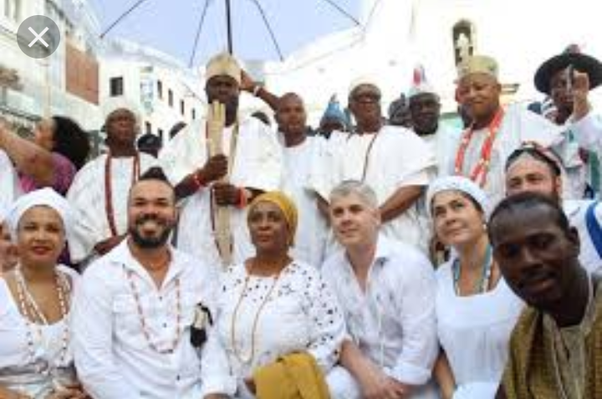
For many people in the Caribbean and wider African diaspora, Yoruba traditions have become an important source of cultural identity.
The rediscovery of African ancestry has encouraged renewed interest in:
* Yoruba language. * Òrìṣà traditions. * African history. * Traditional music. * Indigenous names. * Yoruba philosophy.
This has also created new connections between Yoruba communities in Nigeria and diaspora communities across the Atlantic.
Why This History Matters
The Yoruba influence on Caribbean languages demonstrates something extraordinary.
People who were forcibly separated from their homes managed to preserve parts of their cultural identity across generations.
Languages changed.
Words changed.
Pronunciations changed.
Religious traditions developed in new directions.
Yet many connections survived.
A Yoruba word spoken in a Caribbean ceremony today may carry the memory of a journey that began centuries ago across the Atlantic.
Conclusion
Yoruba influence on Caribbean languages is most visible in Lucumí, religious vocabulary, songs, ceremonial speech, names and musical traditions.
In places such as Cuba and Trinidad and Tobago, Yoruba cultural and linguistic heritage survived through communities that adapted African traditions to entirely new historical environments.
The story is not one of Yoruba remaining unchanged.
It is the story of survival through transformation.
Across the Caribbean, Yoruba words may have acquired new pronunciations, new spellings and new meanings. Yet they continue to remind us of a powerful truth:
Language can travel across oceans, survive generations of change and still carry the memory of where a people came from.