Introduction
The history of the Yoruba people is, in many ways, a history of movement.
Although the Yoruba are primarily associated with southwestern Nigeria today, their presence extends far beyond modern national boundaries. Long before colonial governments drew the borders that define West African states today, Yoruba communities were already migrating, trading, establishing new settlements, and interacting with neighbouring peoples.
These movements helped shape the cultural landscape of West Africa. They spread the Yoruba language, religious beliefs, political institutions, artistic traditions, and commercial networks across a wide region.
Yoruba migration was not a single event. It took place over many centuries and occurred for different reasons, including population growth, trade, warfare, political ambition, environmental factors, and later, colonial economic opportunities.
Understanding these migration patterns offers a deeper appreciation of how Yoruba civilisation expanded and adapted while maintaining a strong sense of identity.
The Earliest Migrations from Ile-Ife
Yoruba oral traditions often identify Ile-Ife as the spiritual and historical centre from which many Yoruba groups emerged.
According to these traditions, descendants of Oduduwa journeyed outward from Ife to establish various kingdoms.
These migrations contributed to the founding of major Yoruba states, including:
* Oyo * Ijebu * Ondo * Ketu * Ijesa * Ekiti communities * Owu settlements
Although historians debate the exact chronology of these traditions, archaeological and linguistic evidence supports the idea that Yoruba-speaking populations expanded gradually from early cultural centres into surrounding regions.
Expansion into Present-Day Benin Republic
Some of the oldest Yoruba migrations crossed into what is now the Republic of Benin.
Yoruba-speaking communities established important settlements such as:
* Kétu * Sàbẹ́ * Ifonyin * Porto-Novo and surrounding areas
These communities maintained strong ties with Yorubaland while developing distinctive local identities influenced by neighbouring groups.
Today, significant Yoruba populations continue to live in Benin Republic, where they contribute to the country's cultural and political life.
The movement of people into this region demonstrates that Yoruba civilisation historically extended beyond present-day Nigeria.
Yoruba Communities in Togo
Yoruba migration also reached parts of modern-day Togo.
In these borderland regions, Yoruba communities interacted with Ewe and other neighbouring peoples.
These settlements often emerged through:
* Trade activities * Family migration * Agricultural expansion * Political alliances
Despite living outside Nigeria, many retained aspects of Yoruba language and cultural practices.
This illustrates how identity could adapt to new environments without disappearing.
Trade as a Driver of Migration
Trade was one of the most important forces behind Yoruba migration.
Yoruba merchants travelled extensively throughout West Africa, exchanging goods such as:
* Kola nuts * Textiles * Beads * Palm products * Agricultural produce * Metal goods
These commercial activities encouraged the establishment of permanent trading communities.
Markets became spaces where cultures met, languages mixed, and relationships formed.
In many cases, traders married into local populations while maintaining connections to their places of origin.
Warfare and Forced Migration
Not all migration occurred voluntarily.
The nineteenth-century Yoruba civil wars produced large movements of people across the region.
Conflicts such as:
* The Owu War * The Ijaye War * The Kiriji War
forced thousands to abandon their homes.
Refugees established new settlements, joined existing communities, and reshaped the demographic map of Yorubaland.
The founding of Abeokuta is one of the clearest examples of how migration under pressure led to the creation of new political centres.
These experiences strengthened broader Yoruba consciousness while preserving local identities.
Colonial Borders and New Realities
The arrival of European colonial powers transformed migration patterns.
Britain and France imposed borders that divided communities that had long interacted freely.
As a result:
* Some Yoruba communities became part of British Nigeria. * Others found themselves under French administration in Benin and Togo.
These artificial boundaries altered trade routes and political relationships.
Yet they could not erase longstanding cultural ties.
Families continued to maintain cross-border relationships, and festivals, marriages, and commerce often transcended colonial divisions.
Urban Migration in the Twentieth Century
The twentieth century witnessed a new phase of Yoruba mobility.
People migrated from rural communities into expanding urban centres such as:
* Lagos * Ibadan * Abeokuta
Others moved to major cities across West Africa in search of education, employment, and commercial opportunities.
This urban migration transformed social structures while creating new forms of Yoruba identity rooted in cosmopolitan environments.
Yoruba Communities Beyond Traditional Homelands
Today, Yoruba communities can be found in numerous West African countries, including:
* Benin Republic * Togo * Ghana * Côte d'Ivoire * Sierra Leone
Some trace their origins to ancient migrations, while others emerged through modern economic mobility.
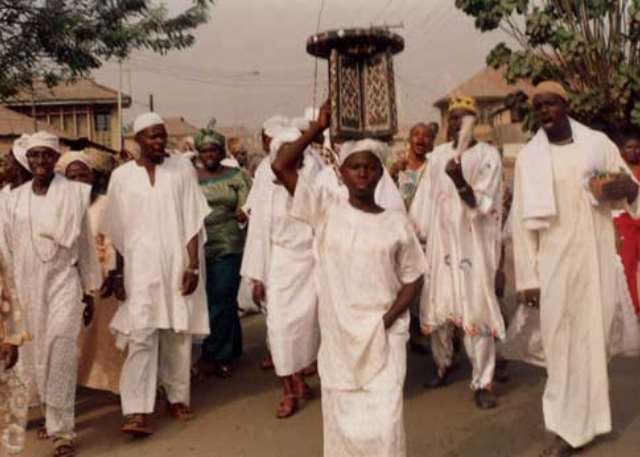
Many maintain cultural associations that organise:
* Festivals * Language classes * Traditional ceremonies * Community support initiatives
These organisations help preserve Yoruba heritage across generations.
Cultural Continuity Across Borders
Despite centuries of migration, several elements have remained remarkably resilient.
These include:
* The Yoruba language and its dialects * Respect for kingship institutions * Ifá traditions and Òrìṣà worship in some communities * Naming practices * Proverbs and oral literature * Festivals and ceremonial customs
Migration changed how these traditions were practised, but rarely erased them entirely.
Instead, Yoruba communities often blended continuity with adaptation.
Conclusion
Yoruba migration across West Africa tells a story of movement, resilience, and cultural endurance.
From early expansions linked to Ile-Ife, to the establishment of settlements in Benin and Togo, from the disruptions of nineteenth-century warfare to the opportunities created by modern urbanisation, Yoruba people have continually adapted to changing circumstances.
Yet wherever they travelled, they carried with them memories of home, the rhythms of language, the wisdom of proverbs, and the values that shaped their civilisation.
Their story reminds us that identity is not confined by borders.
It journeys with people.
It evolves through encounter and experience.
And across West Africa, the enduring presence of Yoruba communities stands as a testament to a civilisation that has long been dynamic, interconnected, and profoundly influential.