Introduction
In Yoruba culture, the birth of a child is not just a family event; it is a deeply spiritual and communal moment. A new baby is seen as a bridge between the unseen world and the living, carrying purpose, destiny, and ancestral connection.
The Yoruba naming ceremony, known as Ìsomọlórúkọ, is a beautiful tradition that formally welcomes this new life. It is filled with prayers, symbolism, joy, and meaning, and it marks the child’s first official introduction to the family, the community, and the world.
The Cultural Significance of Names
Among the Yoruba people of southwestern Nigeria and the diaspora, names are not chosen casually. They are believed to carry spiritual weight and prophetic power. A popular Yoruba saying, “Orúkọ ńróni” (a name influences a person), reflects this belief.
Names often reveal:
* The circumstances surrounding birth * Family lineage and heritage * Religious or spiritual beliefs * Hopes and expectations for the child
When the Naming Ceremony Takes Place
Traditionally, the timing of the ceremony follows cultural and spiritual principles:
* 7th day for girls * 9th day for boys * 8th day for twins * Modern practice often uses the 8th day for all children
This period represents a transition from the spiritual realm (Òrun) to the physical world (Ayé), and the ceremony formally establishes the child’s presence among the living.
The Ceremony: Rituals and Symbolism
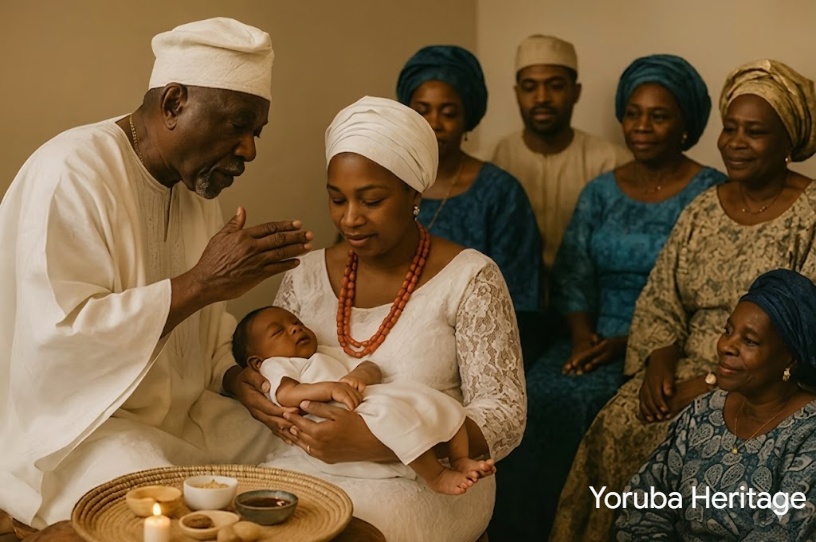
The naming ceremony is usually held in the family home and attended by relatives, friends, and community members. It is presided over by an elder or spiritual leader who leads prayers and blessings.
Key Ritual Elements
A defining feature of the ceremony is the presentation of symbolic items, each representing a wish or prayer for the child’s future:
* Water (Omi): purity and peace * Honey (Oyin): sweetness in life * Salt (Iyọ̀): preservation and value * Palm oil (Epo): smoothness and ease * Kola nut (Obì): vitality and protection * Bitter kola (Orógbó): longevity * Pepper (Ata): strength and resilience
These items may be gently touched to the child’s lips (or symbolically tasted), accompanied by prayers explaining their meaning.
The Naming Process
After prayers, the most anticipated moment arrives—the announcement of names.
Names may be given by:
* Parents * Grandparents * Elders * Spiritual leaders (sometimes through divination)
Each name is announced along with its meaning, and the community responds with blessings and affirmations.
Types of Yoruba Names
Yoruba names fall into distinct categories:
1. Destiny Names (Orúkọ Amútọ̀runwá)
Believed to be brought from heaven, reflecting divine purpose.\ Examples: Ayọ̀délé (Joy has come home), Ọlábísí (Honor is added)
2. Circumstantial Names (Orúkọ Abísọ)
Based on birth conditions.\ Examples: Taiwo (first twin), Kẹ́hìndé (second twin)
3. Family or Heritage Names
Reflect lineage or ancestry.\ Examples: Ọlátúndé (Honor has returned)
4. Oríkì (Praise Names)
Poetic expressions celebrating lineage and identity
5. Spiritual Names
Acknowledging the Orisa\ Examples: Ọlúwáṣeun (God has done well)
Celebration and Community
Beyond the rituals, the naming ceremony is a joyful social event. It includes:
* Traditional music and drumming * Dancing and cultural displays * Feasting with family and guests * Gift-giving and goodwill
It is both a private family milestone and a public declaration of new life within the community.
Spiritual and Philosophical Meaning
The Yoruba naming ceremony goes beyond celebration; it is a spiritual act of identity formation.
It:
* Connects the child to ancestry and heritage * Invokes blessings from God, ancestors, and the community * Anchors the child’s existence in the physical world Counters spiritual uncertainties, such as the concept of abíkú* (a child believed to repeatedly die and return)
In essence, naming is seen as declaring destiny and securing the child’s place in life.
Yoruba Naming Ceremonies in Modern Times
Today, Yoruba families blend tradition with modern influences. Ceremonies may include:
* Religious elements (Christian, Muslim, or traditional) * Event planning and elaborate decorations * Photography and social media sharing
Despite modernization, the core values remain unchanged: identity, spirituality, and community.
Conclusion
Yoruba naming ceremonies are a powerful expression of culture, spirituality, and love. They remind us that a name is more than a label—it is a story, a prayer, and a lifelong companion.
In celebrating a newborn, the Yoruba people celebrate continuity, heritage, and the hope that each new life carries the promise of a meaningful future.