Introduction
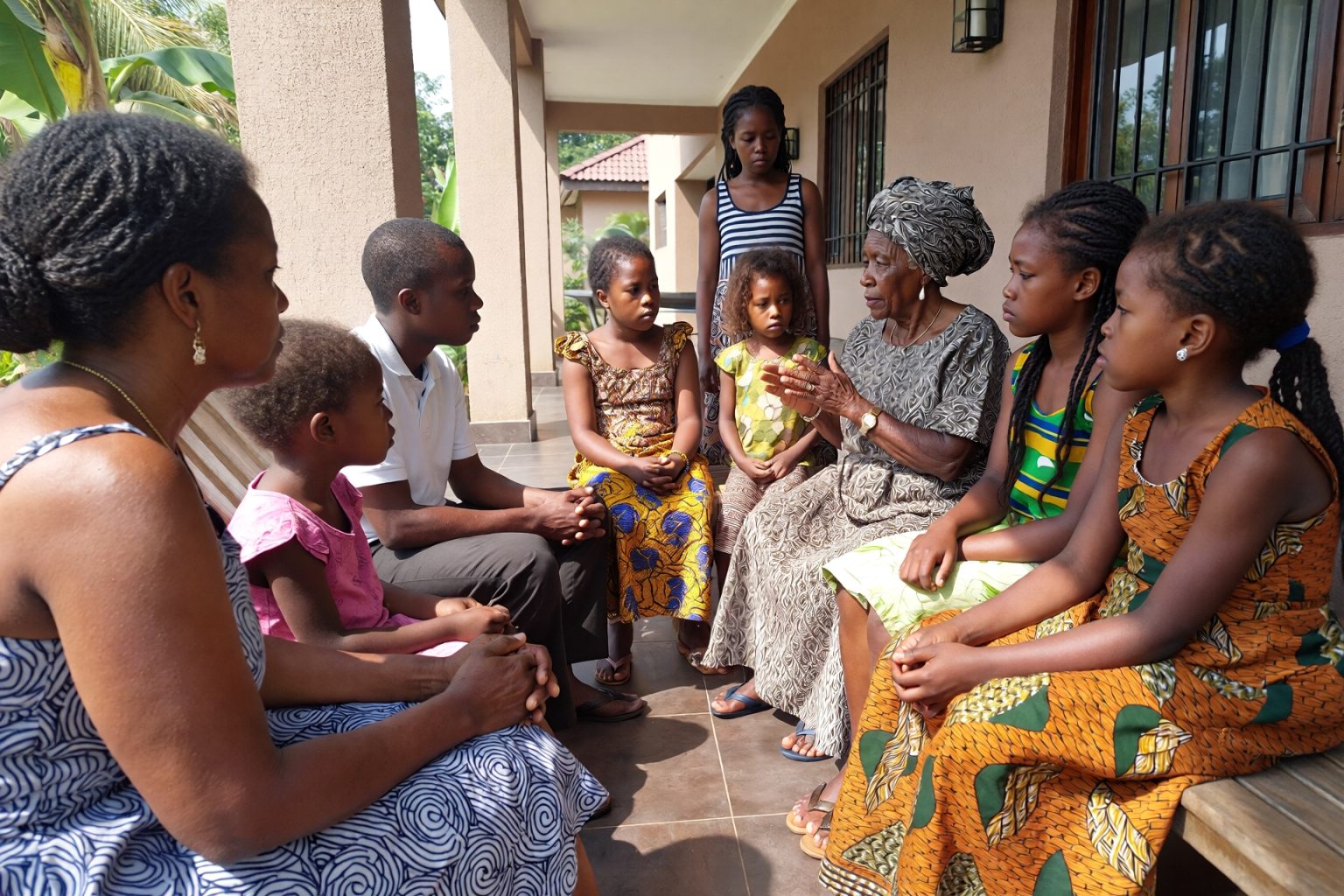
Parenting in traditional Yoruba society has long been regarded as a sacred responsibility that extends beyond providing food, shelter, and protection. Yoruba parenting focuses deeply on moral education, character formation, respect, communal responsibility, spirituality, and cultural continuity. Children are seen not merely as individuals but as future custodians of family honor, community values, and ancestral legacy.
For generations, Yoruba families developed systems of upbringing designed to shape children into responsible, respectful, hardworking, and morally upright members of society. These values were transmitted through storytelling, proverbs, discipline, observation, communal living, spirituality, and daily example.
Even today, many Yoruba parenting principles continue to influence homes across Nigeria and the global Yoruba diaspora.
The Yoruba Understanding of Child Upbringing
In Yoruba culture, raising a child is considered a collective responsibility involving:
* Parents * Grandparents * Extended family * Elders * Neighbors * The wider community
This communal approach is reflected in the Yoruba saying:
> “Ọmọ kì í jẹ́ ti ẹni kan.” > > A child does not belong to one person alone.
Children were therefore raised within a network of social guidance and accountability.
The goal of parenting was not only academic success or material achievement but the development of good character, known as Ìwà rere.
Character Above Wealth
One of the central principles of Yoruba parenting is the belief that character is more important than wealth or status.
The famous Yoruba proverb says:
> “Ìwà l’ẹwà.” > > Character is beauty.
Parents traditionally taught children that:
* Honesty matters more than riches * Respect matters more than pride * Integrity matters more than appearance
A child with poor character could bring shame not only upon themselves but upon the entire family lineage.
Because of this, moral training occupied a central place in child upbringing.
Respect for Elders
Respect for elders is one of the most visible aspects of Yoruba parenting.
Children are taught from an early age to:
* Greet elders properly * Speak politely * Avoid rude interruption * Show humility * Use respectful language
Traditional greetings often involve:
* Prostration for boys * Kneeling for girls
These gestures symbolize humility and recognition of seniority.
Respect in Yoruba culture extends beyond age alone to include wisdom, experience, and social responsibility.
The Role of Proverbs in Moral Education
Yoruba parents and elders frequently used proverbs to teach life lessons.
Proverbs helped children understand:
* Patience * Responsibility * Wisdom * Consequences * Humility * Hard work
For example:
> “Bí ọmọde bá ṣubú, á wo iwájú; bí àgbà bá ṣubú, á wo ẹ̀yìn.” > > When a child falls, they look forward; when an elder falls, they look backward.
This teaches the importance of learning from experience.
Proverbs allowed moral instruction to be memorable, poetic, and culturally meaningful.
Storytelling and Folktales
Folktales played an important role in Yoruba moral education.
Stories involving characters such as:
* Ijapa * Clever hunters * Wicked kings * Wise elders * Talking animals
were used to teach moral lessons indirectly.
Children learned about:
* Greed * Honesty * Pride * Wisdom * Consequences of bad behavior * Importance of cooperation
Evening storytelling sessions also strengthened family bonds and preserved Yoruba language and oral tradition.
Discipline and Responsibility
Traditional Yoruba parenting emphasized discipline and responsibility from an early age.
Children were often assigned age-appropriate tasks such as:
* Sweeping * Fetching water * Assisting in farming * Running errands * Caring for younger siblings
The purpose was to cultivate:
* Hard work * Self-reliance * Responsibility * Contribution to family welfare
Discipline was generally viewed as preparation for adulthood and community life.
However, discipline was ideally expected to be balanced with guidance and moral instruction.
Communal Living and Social Responsibility
Traditional Yoruba society often involved extended family compounds where multiple generations lived together.
This environment taught children:
* Cooperation * Sharing * Respect for others * Collective responsibility
Children grew up observing adults interact socially and morally within the community.
Communal upbringing reinforced the idea that personal actions affect the wider society.
Spiritual and Religious Training
Spiritual education formed an important part of traditional parenting.
Children were introduced to:
* Prayer * Ritual practices * Respect for ancestors * Moral teachings * Sacred festivals * Cultural spirituality
Parents often taught children that spiritual balance and good character were connected.
In traditional belief systems, immoral behavior could disrupt harmony between individuals, community, ancestors, and the spiritual world.
Teaching Through Observation
Yoruba parenting relied heavily on observational learning.
Children were expected to watch and imitate responsible behavior demonstrated by adults.
Parents understood that:
* Children learn from example * Behavior influences character * Actions speak louder than instruction
Therefore, elders were expected to model values such as:
* Honesty * Patience * Hospitality * Respect * Self-control
Gender Roles in Traditional Upbringing
Traditionally, boys and girls were often trained for different social responsibilities.
Boys were commonly taught:
* Farming * Hunting * Craftsmanship * Leadership roles * Family protection
Girls were commonly taught:
* Domestic management * Trading * Childcare * Hospitality * Textile arts
However, Yoruba women historically also played major economic and leadership roles, especially in trade and market systems.
Education Beyond Formal Schooling
Before colonial schools became widespread, Yoruba education was practical, moral, and cultural.
Children learned through:
* Apprenticeship * Oral instruction * Participation in work * Ritual involvement * Observation * Storytelling
Education aimed to prepare individuals for useful participation within society.
Knowledge was therefore closely connected to real-life responsibility.
Hospitality and Social Conduct
Children were taught the importance of hospitality and kindness toward visitors.
Respectful behavior included:
* Greeting guests warmly * Offering water or food * Speaking politely * Assisting elders
Hospitality reflected the Yoruba value of communal harmony and social dignity.
Modern Challenges and Continuity
Modernization, urbanization, globalization, and digital technology have changed many aspects of parenting across Yoruba society.
However, many families still continue to emphasize:
* Respect * Discipline * Hard work * Family loyalty * Moral responsibility * Cultural identity
Parents today often combine traditional values with modern education and global influences.
The Importance of Ìwà Pẹ̀lẹ́
At the heart of Yoruba moral education lies the concept of Ìwà Pẹ̀lẹ́, meaning gentle, disciplined, and balanced character.
This philosophy teaches that true success comes not merely from wealth or intelligence but from moral integrity and peaceful conduct.
Children raised with Ìwà Pẹ̀lẹ́ were expected to become:
* Responsible adults * Good community members * Respectful leaders * Ethical individuals
Conclusion
Yoruba parenting values and moral education reflect a rich cultural philosophy centered on character, respect, communal responsibility, spirituality, and social harmony. Through proverbs, storytelling, discipline, observation, and communal upbringing, generations of Yoruba families shaped children into morally grounded members of society.
Even in the modern world, these values continue to influence Yoruba homes and communities, preserving an important cultural heritage built upon the belief that good character remains the foundation of a meaningful life.