Introduction
The Yoruba people are globally recognized for one of the most remarkable twin traditions in human history. Across Yorubaland, twins are not viewed as ordinary children alone but as spiritually significant beings associated with blessing, protection, prosperity, and sacred mystery. The celebration of twins in Yoruba culture reflects a deep spiritual philosophy that connects birth, destiny, ancestry, and the supernatural world.
The Yoruba also have one of the highest rates of twin births in the world, especially in regions such as southwestern Nigeria. Because of this, twin culture became deeply woven into Yoruba religion, naming systems, art, music, family life, and community traditions.
For centuries, twins have occupied a unique and honored place within Yoruba society, where they are treated with special care, respect, and ceremonial recognition.
The High Rate of Twins Among the Yoruba
The Yoruba have one of the highest documented rates of twin births globally.
Research has shown particularly high twin birth rates in areas such as:
* Igbo Ora * Ibadan * Parts of Ogun and Osun States
(bbc.com)
Because twins occur so frequently among the Yoruba, unique cultural systems developed around their birth and spiritual significance.
Igbo Ora, often called “the twin capital of the world,” even hosts annual twin festivals celebrating this special heritage.
The Spiritual Meaning of Twins
In traditional Yoruba belief, twins are spiritually powerful beings known as Ìbejì.
Ibeji represents the sacred spiritual force associated with twins.
Twins are believed to possess:
* Spiritual protection * Special blessings * Supernatural connection * Shared destiny * Sacred balance
Historically, twins were considered extraordinary because their birth challenged ordinary expectations about life and reproduction.
Rather than being feared, as occurred in some other societies historically, Yoruba communities developed traditions honoring and protecting twins.
The Names Given to Twins
Yoruba twins receive special names that carry spiritual and cultural meaning.
Táíwò (Taiwo)
The first twin born is called Táíwò, meaning:
> “The first to taste the world.”
Traditionally, Táíwò is believed to have been sent ahead by the second twin to inspect the world.
Kẹ́hìndé (Kehinde)
The second twin born is called Kẹ́hìndé, meaning:
> “The one who comes after.”
Despite arriving second physically, Kẹ́hìndé is traditionally regarded as the elder twin spiritually because they supposedly instructed Táíwò to go first.
This belief reflects the Yoruba philosophical understanding that physical appearance may not reveal deeper spiritual reality.
Special Names for Younger Siblings
Children born after twins also receive special names.
Ìdòwú
A child born immediately after twins is called Ìdòwú.
Àlàbá
The next child after Ìdòwú may be called Àlàbá.
These naming systems show how deeply twin culture became integrated into Yoruba family structure and identity.
The Sacred Nature of Ìbejì
Within Yoruba spirituality, Ìbejì is both a concept and a sacred force associated with twins.
Twins are believed to bring:
* Prosperity * Fertility * Joy * Protection * Good fortune
Families with twins often perform rituals, celebrations, and offerings intended to honor the spiritual energy associated with them.
The well-being of twins was considered extremely important because imbalance or mistreatment could disturb spiritual harmony.
Ìbejì Carvings and Memorial Figures
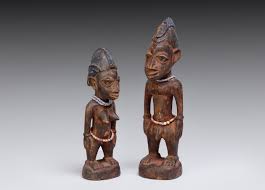
One of the most famous artistic traditions connected to Yoruba twin culture is the carving of Ìbejì figures.
If one twin died, families often commissioned wooden memorial statues representing the deceased child.
These figures were treated with great care and respect through:
* Washing * Dressing * Feeding rituals * Prayer * Offerings
The practice reflected the Yoruba belief that the spiritual bond between twins continues beyond physical death.
Ìbejì carvings are now internationally recognized as important works of African art and spirituality. (britannica.com)
Twin Festivals and Celebrations
Twins are highly celebrated in Yoruba communities through festivals, ceremonies, and public gatherings.
The annual twin festival in Igbo Ora attracts participants from across Nigeria and beyond.
These celebrations include:
* Cultural performances * Music and dance * Traditional attire * Twin parades * Naming ceremonies * Community prayers
The festivals preserve Yoruba cultural identity while celebrating the uniqueness of twin heritage.
Twins in Yoruba Music and Oral Tradition
Twins appear frequently in Yoruba songs, chants, praise poetry, and folktales.
Special songs are often sung for twins during:
* Birth celebrations * Ceremonies * Festivals * Family gatherings
These songs praise the spiritual importance and beauty of twins while invoking blessings upon them.
Oral traditions also preserve stories about the mysterious powers and sacred status associated with Ìbejì.
Spiritual Protection and Ritual Care
Traditionally, twins often received special spiritual attention.
Families sometimes consulted:
* Diviners * Priests * Elders
to ensure spiritual balance and protection.
Protective rituals could include:
* Blessings * Offerings * Naming ceremonies * Sacred prayers * Symbolic clothing
These practices reflected the belief that twins possess unusual spiritual sensitivity and power.
The Role of Women and Mothers of Twins
Mothers of twins often receive special recognition and respect within Yoruba society.
Giving birth to twins may be viewed as:
* A sign of blessing * Spiritual favor * Fertility * Honor
In some communities, mothers of twins participate prominently in cultural festivals and ceremonies.
Colonial Misunderstandings and African Resilience
During colonial periods, many African spiritual practices were misunderstood or dismissed by outsiders.
However, Yoruba twin traditions survived because they remained deeply connected to family life, spirituality, and cultural identity.
Modern scholars now recognize Yoruba twin culture as an important example of:
* Indigenous philosophy * Spiritual symbolism * Family structure * African artistic heritage
Modern Twin Culture Among the Yoruba
Today, twins continue to hold a special place within Yoruba communities both in Nigeria and the diaspora.
Modern celebrations include:
* Twin-themed fashion * Social media communities * Festivals * Academic research * Cultural tourism
Many Yoruba families still preserve traditional naming customs and cultural practices connected to twins.
Philosophical Meaning of Twin Culture
At a deeper level, Yoruba twin culture reflects broader philosophical ideas about:
* Duality * Balance * Spiritual connection * Shared destiny * Harmony between worlds
The relationship between Táíwò and Kẹ́hìndé symbolizes the Yoruba understanding that reality contains both visible and invisible dimensions.
Twin culture therefore represents more than biology alone; it expresses spiritual philosophy and communal identity.
Conclusion
Yoruba twin culture stands among the most distinctive and celebrated traditions in African civilization. Through sacred naming systems, festivals, spiritual beliefs, music, art, and family rituals, the Yoruba transformed the birth of twins into a powerful symbol of blessing, harmony, and ancestral connection.
The enduring reverence for Ìbejì reflects the Yoruba worldview that life is deeply spiritual, interconnected, and filled with sacred meaning. Even today, twins continue to be honored as special gifts whose presence brings joy, prosperity, and cultural pride to Yoruba communities around the world.