Introduction
Yoruba weddings are among the most colorful, symbolic, and culturally rich celebrations in Africa. More than the union of two individuals, a traditional Yoruba wedding represents the joining of families, lineages, and communities.
Filled with music, prayers, laughter, fashion, and ritual, these ceremonies reflect deeply held values such as respect, family honor, unity, and love. Every stage of the celebration carries meaning, from the formal introduction of families to the exchange of gifts and blessings from elders.
Even in modern times, Yoruba wedding traditions continue to thrive, blending ancient customs with contemporary style in ways that preserve cultural identity while embracing change.
The Importance of Family in Yoruba Marriage
In Yoruba culture, marriage is not viewed as a private affair between two people alone. It is a relationship between families. Because of this, parents, elders, and extended relatives play important roles throughout the process.
Respect for family approval is highly valued, and traditional marriage rites are often approached with seriousness and celebration at the same time.
The involvement of elders also reflects the communal nature of Yoruba society, where marriage is seen as a foundation for continuity, stability, and social connection.
The Introduction Ceremony
Before the wedding itself, families usually hold an introduction ceremony. This is the formal meeting between both families, where intentions are declared and relationships begin to develop.
During this stage, the groom’s family officially expresses interest in the bride’s hand in marriage. Conversations are often guided by elders, and respect, courtesy, and hospitality are emphasized throughout the gathering.
This meeting helps establish trust and understanding between both families before larger wedding celebrations take place.
The Engagement Ceremony
The traditional engagement ceremony is one of the most important parts of a Yoruba wedding. Known for its vibrant atmosphere, it combines ritual, performance, and celebration.
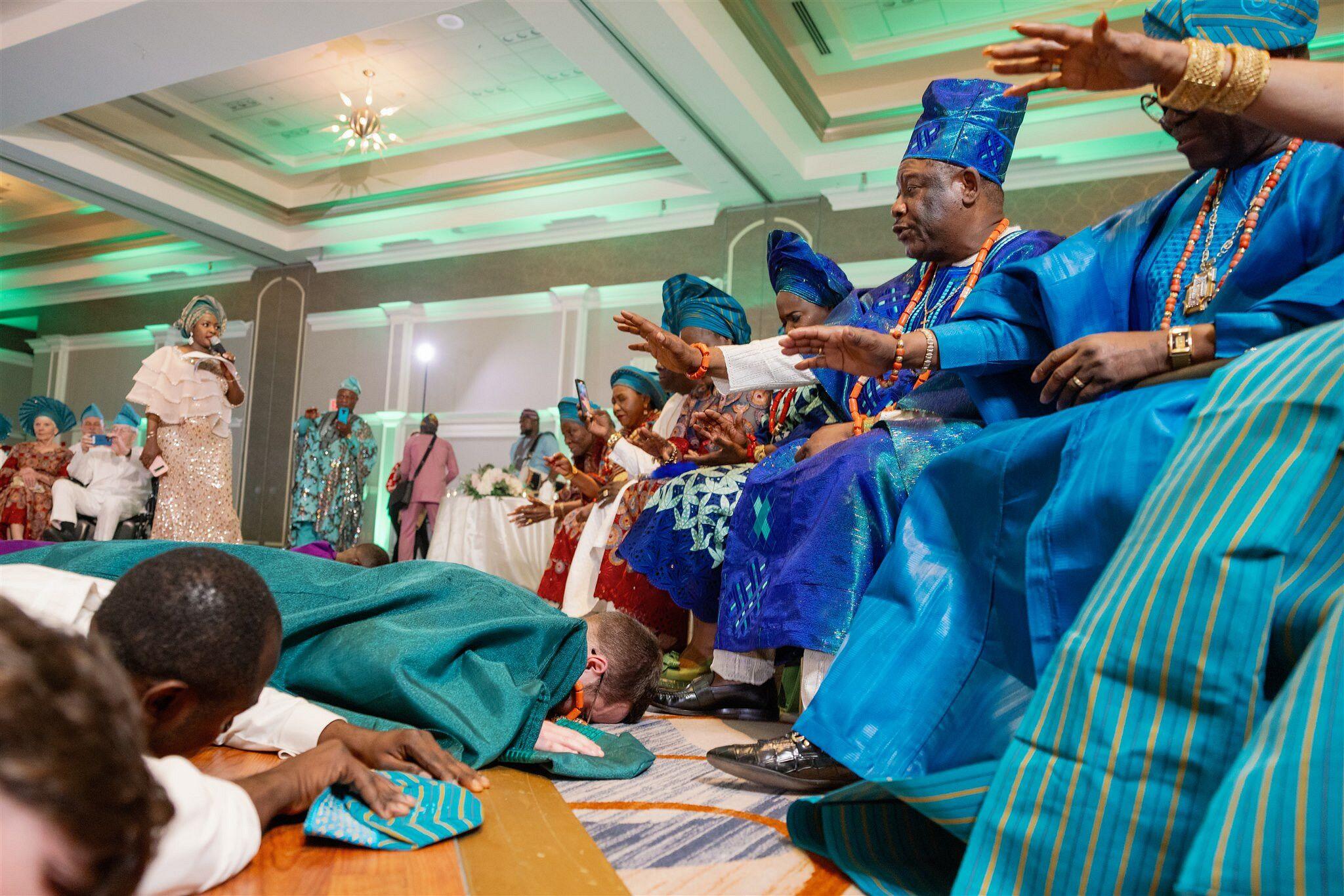
One of the most recognizable customs is the groom’s prostration before the bride’s family. Alongside his friends, he lies flat on the ground as a sign of respect and humility. In response, the bride kneels before the groom’s family to show honor and appreciation.
Prayers are offered by elders for fertility, prosperity, peace, and a successful marriage. Families exchange gifts, and symbolic items are presented as part of the marriage rites.
These gestures reflect Yoruba values of respect, discipline, and mutual honor within marriage.
Traditional Attire and Aso Oke
Fashion is one of the most visually striking aspects of Yoruba weddings. Couples and guests often wear elaborate traditional clothing made from Aso Oke, a handwoven Yoruba fabric associated with prestige and celebration.
Brides commonly wear beautifully designed outfits paired with a gele headwrap, beads, jewelry, and accessories. Grooms often wear agbada or other traditional attire that reflects elegance and cultural pride.
Family members and guests may also wear coordinated outfits known as aso ebi, creating a sense of unity and celebration throughout the event.
Music, Dance, and Celebration
Yoruba weddings are lively and energetic celebrations filled with music and dance. Traditional drummers, especially talking drum performers, create rhythms that bring excitement to the ceremony.
Guests dance joyfully, singers praise the families, and the atmosphere is often vibrant from beginning to end.
Food also plays an important role. Large gatherings are served traditional dishes, reinforcing the Yoruba value of hospitality and generosity.
Symbolism and Spiritual Meaning
Many Yoruba wedding customs carry symbolic meaning. Acts of kneeling and prostration express humility and respect. The prayers of elders symbolize the importance of wisdom and ancestral blessing.
Marriage itself is viewed as both a social and spiritual union, one that connects generations and strengthens community ties.
The ceremony therefore becomes more than entertainment. It is a cultural expression of responsibility, continuity, and shared values.
Modern Yoruba Weddings
Today, many Yoruba weddings combine traditional customs with modern influences. Couples may hold both traditional engagement ceremonies and white weddings in churches or event centers.
Professional photography, elaborate decoration, and social media have added new dimensions to the celebration. Yet despite these modern elements, the core traditions remain deeply respected.
Younger generations continue to embrace Yoruba wedding culture as a way of preserving heritage and expressing identity.
Conclusion
Yoruba wedding traditions are a celebration of love, family, and cultural continuity. Through rituals, music, fashion, and shared joy, they reflect values that have shaped Yoruba society for generations.
From the respectful gestures of the engagement ceremony to the vibrant energy of the celebration, every moment carries meaning.
In a rapidly changing world, Yoruba weddings continue to remind people of the beauty of tradition and the importance of community, respect, and togetherness.