Introduction
The influence of the Yoruba people extends far beyond the borders of Nigeria, Benin, and Togo. Through the transatlantic slave trade, thousands of Yoruba men and women were taken to Latin America, where they faced unimaginable hardship. Yet, despite enslavement and attempts to erase their identity, they preserved essential parts of their language, religion, music, and customs.
Centuries later, traces of Yoruba civilisation remain deeply embedded in many Latin American societies. Yoruba words are still spoken in religious ceremonies, traditional songs, personal names, and everyday expressions. Yoruba customs continue to shape festivals, music, dance, food, and spiritual life, particularly in countries such as Brazil and Cuba.
The survival of these traditions is one of the most remarkable examples of cultural resilience in world history.
How Yoruba Culture Reached Latin America
Between the sixteenth and nineteenth centuries, millions of Africans were transported across the Atlantic.
Large numbers of Yoruba-speaking people arrived in:
* Brazil * Cuba * Puerto Rico * Venezuela * Colombia * Other parts of Latin America
Many had been captured during the political upheavals that followed the decline of the Old Oyo Empire and the Yoruba civil wars.
Although they were separated from their homeland, they carried with them their language, beliefs, songs, and cultural knowledge.
These traditions adapted to new environments while retaining unmistakable Yoruba foundations.
The Survival of the Yoruba Language
Perhaps the most remarkable aspect of Yoruba influence is the survival of the language itself.
Although Portuguese and Spanish became the dominant languages in Brazil and Cuba, many Yoruba words remain in religious practice.
In Cuba, the liturgical language known as Lucumí preserves numerous Yoruba words and expressions.
Similarly, many ceremonies within Candomblé in Brazil continue to use Yoruba-derived prayers, greetings, songs, and ritual terminology.
While pronunciation and vocabulary have evolved over time, their Yoruba origins remain clearly recognisable.
Yoruba Names of the Òrìṣà
Many Yoruba names survive almost unchanged.
Examples include:
| Yoruba Name | Common Form in Latin America | Association | | ----------------- | ---------------------------- | ------------------------------------- | | Ọbàtálá | Obatalá / Oxalá | Purity, wisdom, creation | | Ṣàngó | Changó / Xangô | Thunder, justice, kingship | | Ọ̀ṣun | Ochún / Oxum | Rivers, beauty, prosperity | | Yemọja | Yemayá / Iemanjá | Motherhood, waters, the sea | | Ògún | Ogún / Ogum | Iron, labour, protection | | Èṣù-Ẹlẹ́gbára | Eleguá / Exu* | Crossroads, communication, beginnings |
\*The Brazilian figure known as Exu reflects a distinct development within Afro-Brazilian religions and should not be understood as identical in every respect to the Yoruba conception of Èṣù.
These names remain central to religious life across much of Latin America.
Yoruba Greetings and Sacred Expressions
Many ceremonial expressions still contain Yoruba words.
Examples include:
* Àṣẹ (Axé) – the spiritual power or life force that makes things happen. * Maferefún – an expression of praise and honour used in Cuban Lucumí practice, derived from Yoruba devotional traditions. * Kabíyèsí – royal praise that continues to influence ceremonial language in some diaspora contexts. * Orí – referring to the spiritual concept of one's inner head or destiny.
Among these, Axé has become one of the most widely recognised Yoruba-derived words in Brazil.
It appears not only in religion but also in everyday speech, music, and popular culture as an expression of positive energy, blessing, or spiritual strength.
The Meaning of Axé
The Brazilian word Axé comes directly from the Yoruba concept of Àṣẹ.
In Yoruba philosophy, Àṣẹ refers to the divine power that enables creation, transformation, speech, prayer, and action.
Today, Brazilians use the word in several ways:
* As a blessing. * As a wish for success. * During religious ceremonies. * In popular music. * In everyday conversation.
Although its usage has expanded beyond religious contexts, its roots remain firmly Yoruba.
Music That Preserves Yoruba Language
Music has been one of the greatest protectors of Yoruba heritage.
Religious songs performed in:
* Santería * Candomblé * The Orisha tradition of Trinidad
continue to include Yoruba words that have been sung continuously for generations.
Many practitioners memorise these songs without necessarily speaking modern Yoruba in daily life.
Through music, the language continues to survive.
Yoruba Traditions in Festivals
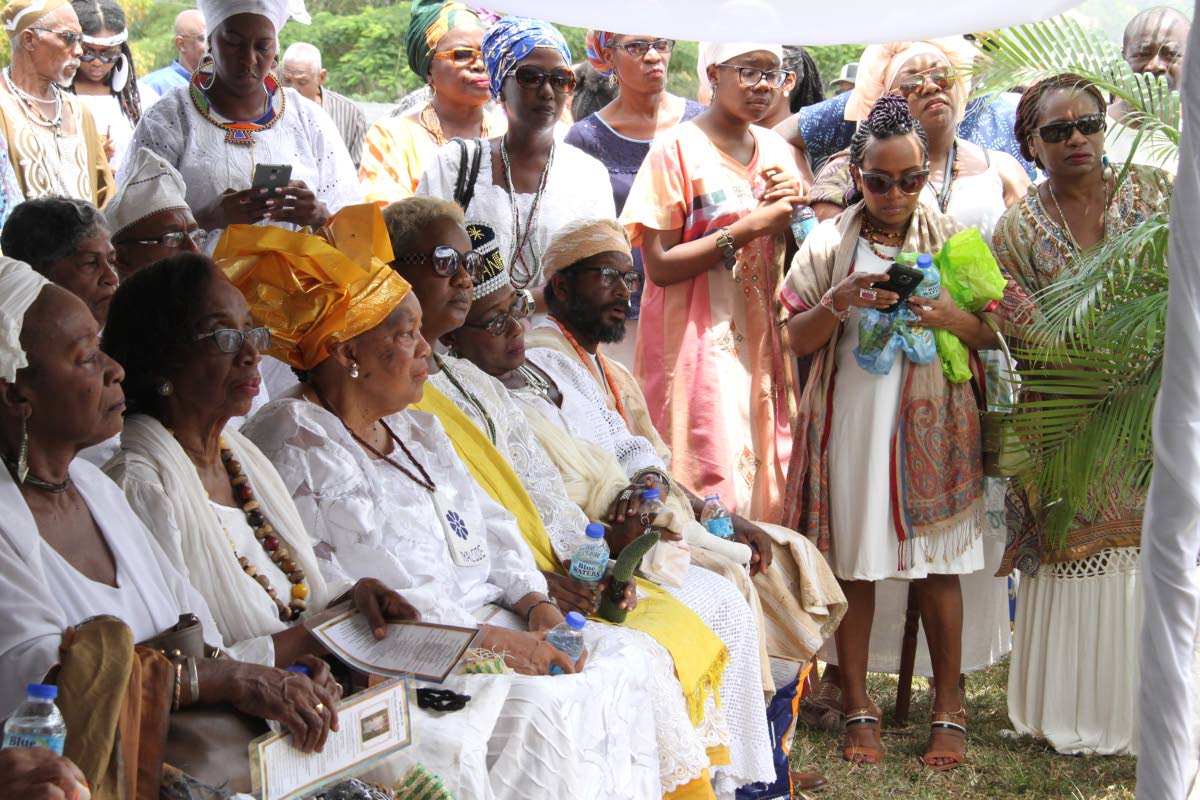
Many festivals across Latin America preserve Yoruba traditions.
Examples include:
* The Festival of Iemanjá in Brazil. * Celebrations honouring Changó in Cuba. * Annual ceremonies dedicated to various Òrìṣà. * Cultural festivals celebrating African heritage.
These events commonly feature:
* Sacred drumming. * Ritual dance. * Ceremonial dress. * Offerings. * Storytelling. * Community gatherings.
Although they have developed unique local characteristics, their Yoruba foundations remain evident.
Yoruba Influence on Food and Daily Life
Yoruba influence also appears in Latin American cuisine, particularly in the Brazilian state of Bahia.
Foods associated with Afro-Brazilian traditions often include ingredients long familiar in West Africa, such as:
* Okra. * Palm oil. * Black-eyed peas. * Yams. * Beans.
Some ceremonial foods prepared for the Òrìṣà preserve cooking methods and symbolic meanings rooted in Yoruba tradition.
These culinary practices continue to connect families with their African heritage.
Reconnecting with Yorubaland
In recent decades, many Afro-Latin communities have renewed their connections with Yorubaland.
Religious leaders, historians, musicians, and students regularly visit Nigeria to:
* Learn the Yoruba language. * Study Ifá traditions. * Participate in festivals. * Strengthen cultural relationships. * Preserve historical knowledge.
These exchanges have helped many people better understand the origins of the traditions they inherited from their ancestors.
Why These Traditions Matter
The survival of Yoruba words and traditions in Latin America is more than an interesting historical fact.
It demonstrates that culture can endure despite displacement, oppression, and the passage of time.
These traditions continue to:
* Preserve historical memory. * Strengthen cultural identity. * Connect Africa with the diaspora. * Inspire artistic creativity. * Promote intercultural understanding.
They also remind the world of the profound contributions that African civilisations have made to global culture.
Conclusion
The presence of Yoruba words and traditions throughout Latin America stands as one of the most powerful examples of cultural continuity in history. Across Brazil, Cuba, and other parts of the region, the voices of Yoruba ancestors still resonate in sacred songs, prayers, festivals, personal names, and everyday expressions such as Axé, a direct descendant of the Yoruba concept of Àṣẹ.
From the worship of the Òrìṣà to the rhythms of Batá drums, from ceremonial greetings to traditional foods, Yoruba heritage remains a vibrant part of Latin American life. These traditions have evolved over centuries, shaped by local cultures and historical experiences, yet they continue to reflect the enduring influence of Yorubaland.
Their survival is a testament to the resilience of the Yoruba people and to the enduring power of language, memory, and faith. Even across oceans and generations, Yoruba civilisation continues to enrich the cultural landscape of Latin America, serving as a bridge between Africa and its diaspora.