Introduction
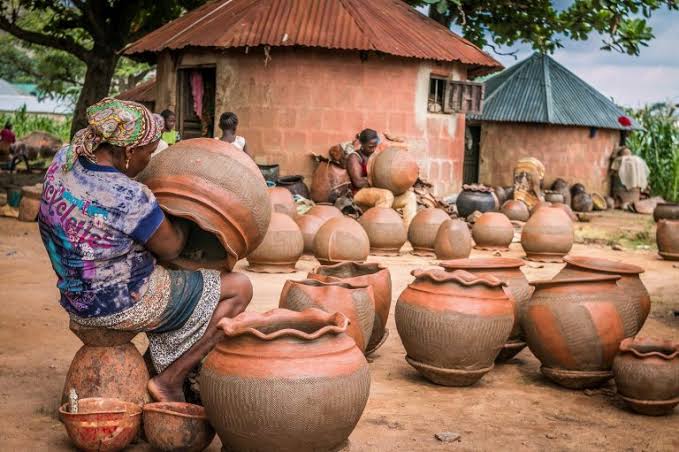
Across Nigeria, a new generation is showing that traditional Yoruba crafts do not belong only to museums or history books. Young designers, artists and entrepreneurs are finding fresh ways to preserve skills such as adìrẹ textile making, beadwork, pottery, weaving, leatherwork, carving and other forms of indigenous craftsmanship.
What makes this movement especially interesting is that preservation is happening through innovation. Traditional knowledge is being adapted for contemporary fashion, interior design, digital storytelling and modern business, helping old techniques find new audiences.
A New Generation of Cultural Entrepreneurs
One of the clearest examples is the revival of Adìrẹ, the Yoruba resist dyed textile tradition. Young designers and entrepreneurs are transforming it into contemporary dresses, shirts, streetwear, accessories and even interior decoration. Research and recent reporting describe this revival as being driven partly by youth creativity, entrepreneurship and renewed cultural pride.
This is important because the goal is not simply to reproduce the past exactly as it was. Young creatives are asking a different question:
How can a traditional craft survive in the modern world?
Their answer is increasingly clear: by making heritage useful, beautiful and relevant to contemporary life.
From Traditional Workshops to Modern Fashion
Adìrẹ, once strongly associated with traditional clothing and ceremonial wear, is now appearing in modern silhouettes and global fashion spaces. Contemporary collections use traditional resist dyeing while adapting the fabric to present day tastes.
This does not mean the traditional process has disappeared. In many cases, modern designers still depend on experienced artisans who understand the techniques passed down through generations.
The result is a meeting point between old knowledge and new imagination.
Learning From Master Artisans
One of the greatest challenges facing indigenous crafts is the loss of practical knowledge. A craft can disappear when younger generations no longer learn how to make it.
That is why training centres and cultural organisations are becoming increasingly important. The Adire Oodua Textile Hub, for example, runs educational and participatory programmes designed to preserve traditional Adìrẹ techniques while encouraging innovation among adults and young people.
The OlaDapo Autentic Art Adire Revival Foundation also focuses on training young people and communities in Adìrẹ making as a form of cultural preservation and sustainable entrepreneurship.
These initiatives recognise an important truth:
Heritage survives when knowledge is passed from hands to hands.
Crafts Are Becoming Businesses
For many young Nigerians, indigenous crafts are also becoming economic opportunities.
Traditional skills can now support businesses in:
* Fashion. * Jewellery and beadwork. * Interior decoration. * Textile design. * Home décor. * Cultural tourism. * Digital content. * Art exhibitions.
The revival of Adìrẹ in particular demonstrates how cultural knowledge can become entrepreneurial capital. Recent academic research on Adìrẹ guilds in Abeokuta examines how artisans and cultural entrepreneurs translate traditional craft skills into wider markets and networks.
This creates a powerful connection between cultural preservation and economic independence.
Social Media Has Changed the Game
In the past, a talented craftsperson might depend mainly on a local market or physical shop.
Today, a young artisan can use photography, video and digital storytelling to introduce traditional crafts to audiences far beyond Yorubaland.
A recent example from 2026 highlighted a Yoruba inspired textile designer whose online video of hand dyeing indigo fabric attracted significant public attention and commercial interest.
Digital platforms have therefore become part of the modern cultural workshop.
A process that once remained largely hidden inside an artisan's workspace can now be filmed, shared and appreciated by people across the world.
Institutions Are Also Helping Keep Skills Alive
Nike Art Gallery has played a major role in promoting Nigerian artistic traditions and providing art education and vocational training. Its work includes preserving textile traditions and supporting younger generations through training in areas such as textile art, dyeing, painting and embroidery.
These spaces are important because young people need more than admiration for culture. They need opportunities to learn, practise, experiment and earn from traditional knowledge.
The Challenge of Cheap Imitations
The revival of indigenous crafts is not without problems.
Mass produced fabrics and cheap imitations can compete with handmade products. This creates pressure on artisans because authentic craftwork often requires more time, skill and labour.
Research on contemporary Adìrẹ has noted the challenge posed by mass produced alternatives, while recent studies also point to the importance of innovation and market development in helping indigenous textiles remain economically sustainable.
This means young Nigerians reviving traditional crafts must balance two responsibilities:
Protect authenticity.
Adapt to changing markets.
Neither is easy, but both are necessary.
More Than Fashion
The revival of Yoruba crafts is about more than wearing beautiful clothes or selling handmade products.
Every traditional technique carries knowledge.
An Adìrẹ pattern can preserve artistic traditions.
A woven textile can carry generations of technical skill.
Beadwork can communicate identity and craftsmanship.
Carving and pottery can reveal how communities understood beauty, spirituality and everyday life.
When a young Nigerian learns one of these skills, they are not simply learning how to make an object.
They are learning how previous generations thought, created and communicated.
A Bridge Between Generations
Perhaps the most beautiful part of this revival is the relationship between generations.
Older artisans possess techniques developed through years of experience.
Younger creatives bring new ideas, technology, branding and access to modern audiences.
Together, they create a bridge:
The elders preserve the knowledge.\ The young reinterpret it.\ The future carries it forward.
Conclusion
Young Nigerians are proving that Yoruba indigenous crafts do not have to remain frozen in the past. Through fashion, entrepreneurship, workshops, social media and contemporary design, they are giving traditional skills new life.
The revival of Adìrẹ is one of the strongest examples, but the larger lesson extends to many forms of indigenous craftsmanship.
Culture does not survive simply because people admire it.
Culture survives when people practise it, teach it, improve it and find new ways to make it meaningful.
For a new generation of Nigerians, reviving Yoruba crafts is therefore not about going backwards. It is about carrying the creativity of the past into the future.