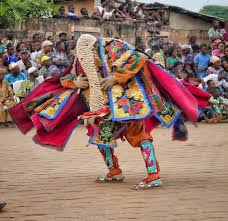
Oyeku Meji: The Profound Wisdom of Endings
> "Iku kii pa ọ — Iku n gbé ọ lọ si ibiti iwọ ti wà." > (Death does not kill you — Death carries you to where you truly are.)
---
The Odu of Transition
Oyeku Meji is the second of the major Odu Ifa, and perhaps the most misunderstood. Its signature — eight double marks — speaks of completion, totality, and the fullness of a cycle. While many fear this Odu, the Babalawo treats it with deep respect, for Oyeku Meji carries the most honest truth in the entire corpus:
Everything ends. And in every ending is the seed of something sacred.
---
The Conversation Between Life and Death
There was a time when Life and Death were brothers who lived in the same compound.
Life was celebrated. Feasts were thrown in his honor. Songs were composed. Children ran to greet him.
Death walked in silence, unannounced, unwelcome.
One day, Death sat beneath the iroko tree and wept.
Orunmila passed by and asked: "Why does Death weep?"
"Because no one understands me," said Death. "They think I am an enemy. But I am the guardian of rest. I am the one who says: 'Enough. You have carried this long enough. Come home.'"
Orunmila cast the Opele. Oyeku Meji appeared.
"Death," said Orunmila, "you are not the end of the story. You are the chapter break. Without you, there would be no room for the new."
And so Orunmila taught that to fear death absolutely is to fear the very mechanism of renewal.
---
What Oyeku Meji Teaches
On Mortality: Oyeku Meji does not soften the reality of death. It faces it directly. But it reframes death not as failure but as completion. A life fully lived does not end — it graduates.
On Letting Go: The spiritual teaching of Oyeku Meji is urgently relevant: we must practice dying every day. Let go of yesterday's identity. Let go of yesterday's wounds. Let go of yesterday's victories. Make space.
On Ancestors: Oyeku Meji is deeply connected to the ancestors — those who have made the crossing. This Odu teaches that the dead are not gone; they are present in a different register. The relationship with ancestors is one of the most powerful resources available to the living.
---
Divination Verse
Oyeku lo difa fun Iku Ti o mbọ wá ba ayé sọrọ Iku wí pé, mi o jẹ ọta yin Mo jẹ ẹnu-ọna si ibiti ẹ ti wà
(Oyeku cast Ifa for Death Who came to speak with the world Death said: I am not your enemy I am the doorway to where you truly are)
---
Spiritual Practices Related to Oyeku Meji
- Ancestor veneration: Setting a small space with water, white candles, and the names of departed loved ones
- Letting go rituals: Writing what must be released on paper, then releasing it in water or flame (safely)
- Night prayer: Oyeku Meji governs the night; prayers at midnight carry particular power under this Odu
- Silence: Oyeku Meji asks for regular periods of silence — true silence — to honor the space between
---
For Those Grieving
If you are reading this while in grief, Oyeku Meji has a message for you:
The one you love has not been destroyed. They have been repositioned. The love between you is not subject to physical death. Ancestors remain present in the prayers we say, the names we speak, the characteristics we see repeating in our children.
Grieve fully. Yoruba culture does not shame grief — it creates ceremony around it, honors it, moves through it communally.
And then, when you are ready, let the grief become gratitude for what was.
---
Modern Reflection
Oyeku Meji speaks to every ending: the end of a career, a relationship, a chapter of identity. It says the same thing each time: do not cling to what is complete.
The hardest wisdom is knowing when something is finished — and choosing to honor the ending rather than drag it forward.
---
This teaching is shared with deep respect for the Ifa tradition and the Babalawo who carry it.