Introduction
One of the most frequently misunderstood concepts in Yoruba spirituality is Ẹbọ, often translated into English as "sacrifice" or "offering". To many people unfamiliar with Ifá, the word immediately suggests the ritual slaughter of animals. However, this narrow interpretation overlooks the much broader meaning of Ẹbọ within Yoruba philosophy.
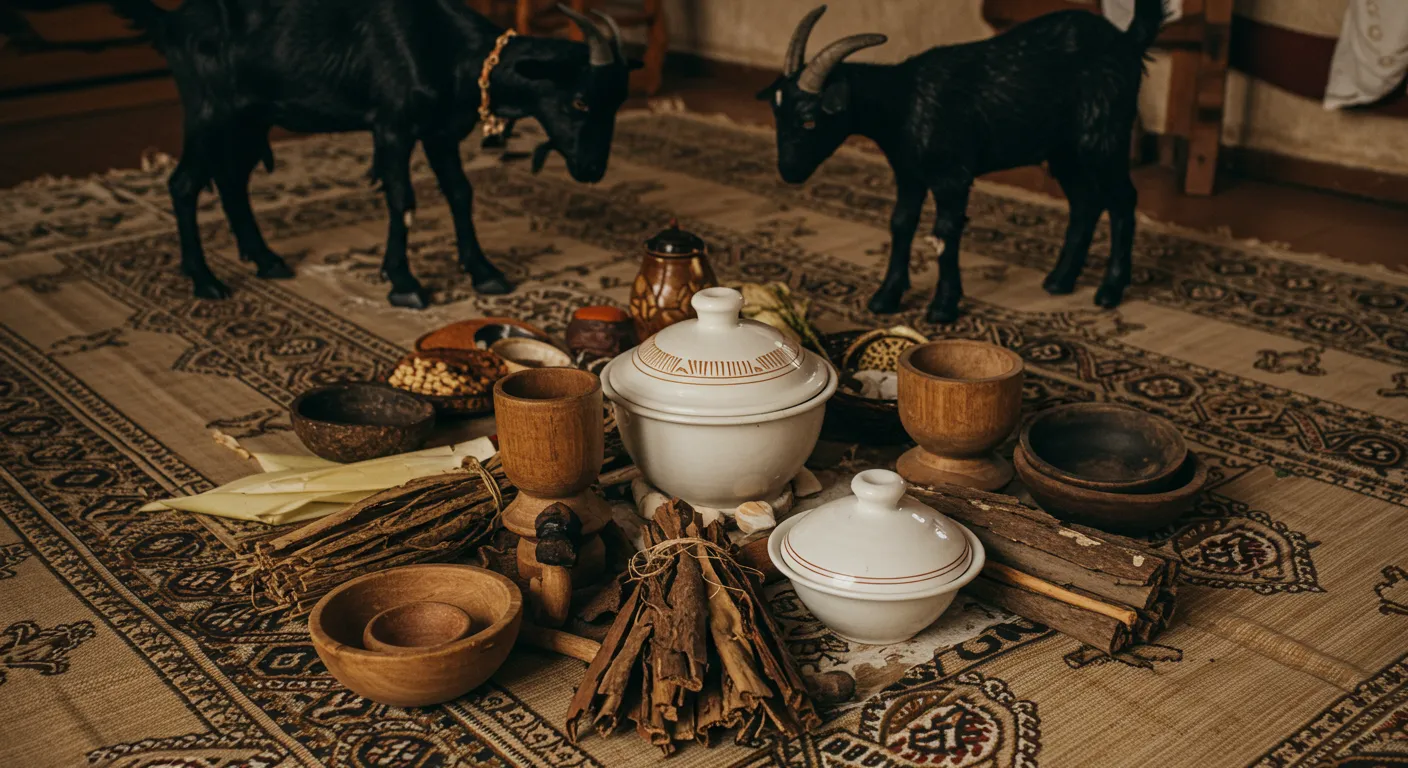
In Ifá teachings, Ẹbọ is a sacred act of giving. It is an expression of gratitude, humility, responsibility, and the desire to restore balance between human beings, the spiritual world, nature, and the community. While some traditional rituals may involve animal offerings in specific contexts and according to established customs, many forms of Ẹbọ involve food, water, fruits, kola nuts, prayers, acts of charity, symbolic items, or other offerings depending on the guidance received through Ifá and the traditions of a particular lineage.
At its heart, Ẹbọ is not about loss. It is about restoring harmony and acting with wisdom.
What Does Ẹbọ Mean?
The Yoruba word Ẹbọ refers to an offering made for a spiritual purpose.
Within Ifá, it may be performed to:
* Express gratitude. * Seek divine guidance. * Restore harmony. * Mark important life events. * Support communal wellbeing. * Address spiritual obligations identified through divination.
Rather than being viewed as a payment for blessings, Ẹbọ is understood as an act of cooperation with divine wisdom and a demonstration of personal responsibility.
The Role of Ifá in Recommending Ẹbọ
In traditional practice, Ẹbọ is not performed randomly.
A consultation through Ifá, conducted by a trained Babaláwo, may indicate that an offering is appropriate in response to a particular situation.
The purpose of the consultation is to understand:
* The nature of a challenge. * The lessons to be learned. * The actions required. * The most suitable form of offering, if one is recommended.
In this way, Ẹbọ is closely connected to discernment and ethical decision-making rather than superstition.
A Principle of Balance
Yoruba cosmology teaches that life depends upon balance.
When relationships become strained, promises are broken, or people neglect their responsibilities, harmony may be disturbed.
Ẹbọ symbolises a willingness to restore that balance through sincere action.
This may involve:
* Offering thanks after receiving blessings. * Seeking reconciliation. * Fulfilling neglected obligations. * Making amends for wrongdoing. * Supporting those in need.
The emphasis is not simply on ritual but on aligning one's actions with good character.
Ẹbọ Is More Than Material Offerings
Ifá teaches that meaningful sacrifice often extends beyond physical objects.
Depending on the circumstances, sacrifice may include:
* Acts of generosity. * Feeding those in need. * Caring for family members. * Speaking truthfully. * Keeping promises. * Living with integrity. * Offering prayers of thanksgiving.
These actions reflect the Yoruba belief that true spirituality is demonstrated through both ritual and everyday conduct.
Different Forms of Ẹbọ
The form of Ẹbọ varies according to the guidance received through divination and the traditions of a particular community.
Offerings may include:
* Water. * Fruits. * Yams. * Kola nuts. * Palm oil. * Cooked food. * Cloth. * Other symbolic items.
In some traditional contexts, specific animal offerings may also be prescribed as part of long-established religious practice. Such rites are governed by customary rules, vary among Yoruba traditions, and are understood by practitioners within their religious framework. They should not be assumed to represent every form of Ẹbọ or every expression of Yoruba spirituality.
Ẹbọ and Good Character
A central teaching of Ifá is that no offering can replace ìwà pẹ̀lẹ́, meaning good character.
The Ifá corpus consistently emphasises qualities such as:
* Honesty. * Patience. * Compassion. * Humility. * Respect. * Self-discipline.
Without these virtues, ritual alone is considered incomplete.
Many Ifá verses teach that lasting wellbeing depends not only on offerings but also on the way a person lives each day.
Misconceptions About Ẹbọ
Over the centuries, Ẹbọ has often been misunderstood or misrepresented.
Some misconceptions include the belief that:
* Every Ẹbọ involves animal sacrifice. * Offerings are intended to "buy" miracles. * Ifá encourages fear rather than wisdom. * Ritual alone determines a person's future.
Traditional Yoruba teachings present a more nuanced understanding.
Ifá emphasises that wisdom, ethical living, personal effort, prayer, and community responsibility all work together. Ẹbọ is one part of this broader spiritual and moral framework.
Ẹbọ in the Yoruba Diaspora
Through the African diaspora, the concept of Ẹbọ continues to play an important role in traditions such as:
* Santería in Cuba. * Candomblé in Brazil. * The Orisha tradition in Trinidad and Tobago.
Although practices differ between communities and have evolved over time, the underlying principle remains the same: offerings express devotion, gratitude, and the desire to live in harmony with the divine and with others.
A Living Tradition
Today, practitioners and scholars continue to preserve the teachings surrounding Ẹbọ through oral instruction, cultural education, and religious practice.
They emphasise that understanding Ẹbọ requires respect for its cultural context and recognition that it is part of a wider philosophy centred on wisdom, responsibility, and moral living.
For many Yoruba people and members of the global diaspora, Ẹbọ remains a meaningful expression of faith and an enduring link to ancestral tradition.
Conclusion
Ẹbọ occupies a central place in Ifá because it represents far more than the idea of sacrifice. It is a sacred expression of gratitude, responsibility, reconciliation, and the desire to restore harmony between humanity, the spiritual world, and nature. Whether through prayers, food, charitable acts, symbolic offerings, or other forms of devotion, Ẹbọ reminds individuals that wellbeing is sustained not only by seeking blessings but also by living with integrity and fulfilling one's responsibilities.
Within Ifá, the greatest offering is not simply what a person places on an altar, but the quality of the life they choose to live. Guided by wisdom, good character, and sincere action, Ẹbọ becomes a powerful reminder that true spirituality is measured by how people honour both the divine and one another.