Introduction
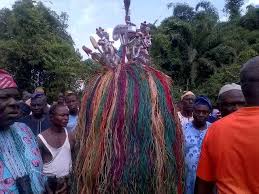
Across Yoruba mythology, there are stories that do more than entertain. They carry layered meanings about life, nature, and the unseen forces that shape human destiny. Among these narratives is the enigmatic figure of Agẹmọ, a being closely associated with transformation, secrecy, and the mysterious changes that occur in the natural and spiritual worlds.
Unlike more widely known Òrìṣà such as Shango or Oshun, Agẹmọ is not always placed in the same category in all traditions. In many accounts, Agẹmọ is understood as a powerful mystical entity or forest spirit, deeply tied to concealment, adaptability, and the unseen processes of change.
At its heart, the story of Agẹmọ is not simply about a creature or spirit. It is about transformation itself.
It is about how nothing in life remains fixed forever.
The Spirit of the Hidden Forest
In traditional Yoruba imagination, the forest is never just a collection of trees. It is a living space filled with unseen energies, sacred presences, and powerful forces that operate beyond human sight.
It is within this mysterious environment that Agẹmọ is said to dwell.
He is not easily seen.
He does not remain in one form.
Instead, he exists in a state of constant change, blending into his surroundings and moving silently through the world of leaves, shadows, and wind.
Because of this, Agẹmọ is often associated with secrecy and hidden knowledge.
He represents everything that cannot be grasped at a single glance.
The Nature of Transformation
One of the most striking qualities associated with Agẹmọ is transformation.
In many interpretations, Agẹmọ is symbolically linked with the chameleon, a creature known for its ability to change colour and adapt to its environment.
This ability is not seen merely as a physical adaptation. In Yoruba symbolic thought, it reflects deeper truths about existence.
Life itself is constantly shifting.
Human beings change as they grow.
Circumstances evolve.
Fortunes rise and fall.
Nothing remains permanently fixed.
Agẹmọ embodies this reality.
He reminds the world that change is not an exception to life, but its natural condition.
The Lesson of Adaptability
The story of Agẹmọ is often told as a lesson in adaptability.
According to oral traditions, those who encounter Agẹmọ rarely see him in the same form twice. He appears differently depending on the moment, the situation, and even the perception of the observer.
This shifting nature carries an important message.
Those who survive and thrive in life are not always the strongest or the fastest, but often those who can adapt wisely to changing conditions.
In this sense, Agẹmọ becomes a teacher of resilience.
He does not encourage deception, but rather awareness.
He teaches that rigidity can lead to failure, while flexibility can lead to survival and growth.
Agẹmọ and the Power of Perception
Another important aspect of Agẹmọ’s mystery lies in perception.
What a person sees depends on where they stand, how they look, and what they are able to understand.
In some traditions, Agẹmọ appears differently to different observers at the same moment. This is not meant to confuse for its own sake, but to illustrate a deeper philosophical truth.
Reality is often broader than individual perspective.
Just as in the well known Yoruba moral tale of the traveller’s hat seen from different angles, Agẹmọ’s shifting form reminds us that truth can have multiple dimensions.
What seems fixed may actually be fluid.
What appears simple may be complex.
Understanding requires humility.
The Forest as a Symbol of Life
The forest in Yoruba thought often represents the unpredictable nature of life itself.
It is beautiful, but also uncertain.
It provides nourishment, but also hides danger.
It offers paths, but also confusion.
Agẹmọ, as a forest spirit, reflects this duality.
He is neither fully predictable nor entirely chaotic. Instead, he represents the balance between stability and change that governs existence.
Just as a traveller must learn to navigate the forest carefully, human beings must learn to navigate life with wisdom, patience, and awareness.
Agẹmọ does not block the path.
He simply reminds travellers that the path is never entirely the same.
Transformation in Human Life
The symbolism of Agẹmọ extends beyond myth into everyday human experience.
People change roles throughout their lives.
A child becomes an adult.
An apprentice becomes a master.
A stranger becomes a friend.
A weak moment becomes strength through learning.
In Yoruba philosophical thought, these transitions are not accidents. They are part of the natural rhythm of existence.
Agẹmọ represents this continuous process of becoming.
He is the reminder that identity is not fixed, but shaped over time through experience, choices, and destiny.
Agẹmọ and Spiritual Mystery
Beyond physical and philosophical meanings, Agẹmọ also represents the mystery of the unseen world.
In Yoruba spirituality, not everything is meant to be fully revealed.
Some forces operate quietly, beyond human understanding.
Agẹmọ embodies this hidden dimension of existence.
He reminds people that mystery is not something to fear, but something to respect.
There are aspects of life that unfold slowly, revealing themselves only with time and wisdom.
Attempting to force understanding too quickly can lead to confusion, just as rushing through a forest path can lead to getting lost.
The Moral Teaching of Agẹmọ
At the heart of the story lies a simple but powerful moral lesson.
Life is change.
Adaptation is wisdom.
And humility is necessary for understanding reality.
Agẹmọ teaches that those who resist change too rigidly may struggle, while those who learn to adjust with awareness and integrity are more likely to flourish.
However, this adaptability must not be confused with dishonesty or manipulation.
True transformation, in Yoruba philosophical thought, is guided by character, balance, and respect for order.
This aligns with the broader ideal of Omolúàbí, where good character remains the foundation of all behaviour.
Conclusion
The story of Agẹmọ and the mysteries of transformation is a reflection of one of the deepest truths in Yoruba thought: nothing in life is static.
Through his association with the forest, shifting forms, and hidden presence, Agẹmọ becomes a symbol of change, adaptability, and the unseen forces that shape human existence.
He teaches that life requires flexibility, awareness, and humility, and that understanding the world means accepting its constant movement.
In the end, Agẹmọ is not simply a spirit of mystery. He is a reminder that transformation is woven into the very fabric of existence.
And those who learn to move with it, rather than against it, begin to understand one of life’s greatest secrets: that change is not something to fear, but something to master.