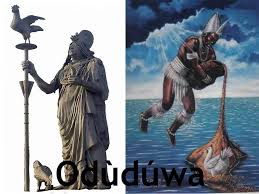
Among the Yoruba people of West Africa, life is viewed as a sacred gift from Olódùmarè, the Supreme Creator. In traditional Yoruba belief, everything in existence has a purpose, and every event in the world is connected to divine wisdom. One of the most profound questions that Yoruba elders sought to answer was: Why do human beings die?
Like many ancient cultures, the Yoruba developed stories to explain the mysteries of life and death. These stories were passed down through generations by elders, priests, storytellers, and custodians of oral tradition. While there are several variations across different Yoruba communities, one of the most popular traditional accounts explains how death first entered the world.
The Time When Humans Did Not Die
According to Yoruba tradition, there was once a time when human beings did not experience permanent death. When people grew old, they would become weak and tired, but they would eventually renew themselves and continue living. The earth was filled with people, and families remained together for generations without separation.
During this ancient period, Olódùmarè maintained a close relationship with humanity. Messages between heaven and earth were often carried by divine messengers. Among these messengers were creatures entrusted with important responsibilities.
One day, Olódùmarè decided to send a message to humankind concerning the future of life on earth.
The Divine Message
Olódùmarè summoned a trusted messenger, often identified in some versions of the story as a chameleon. The Creator instructed the messenger to deliver a simple but powerful message:
"Tell the people that when they die, they shall return to life again. Death shall not be permanent."
The messenger accepted the assignment and began the journey to earth. However, the chameleon was known for moving slowly and carefully. It stopped frequently along the way, taking its time and paying attention to every detail of its surroundings.
As the messenger journeyed, another creature learned of the divine message. In many versions of the story, this creature was a dog. In other versions, it is a bird or another animal. Regardless of the variation, the creature became impatient and decided to act independently.
The False Message
The second messenger hurried ahead and arrived among human beings before the chameleon.
When the people gathered to hear the news from heaven, the impatient messenger announced:
"Olódùmarè says that when people die, they will never return. Death will be final."
The people were shocked and saddened by the message, but they accepted it because they believed it came from the Creator.
Not long afterward, the true messenger finally arrived. The chameleon delivered the original message exactly as Olódùmarè had commanded:
"When people die, they shall live again. Death shall not be permanent."
The people became confused. They had now received two completely different messages.
Olódùmarè's Decision
The matter was taken before Olódùmarè for judgment. The Creator learned that the false message had reached humanity first. According to Yoruba belief, spoken words carry tremendous spiritual power. Once a declaration has been accepted and established in the world, it cannot simply be withdrawn without consequence.
Olódùmarè declared that the first message received by humanity would stand. As a result, death became a permanent part of human existence.
From that day onward, human beings would live for a time on earth and eventually die. However, death would not be the end of existence itself. The spirit would continue its journey in the spiritual realm, where ancestors reside and remain connected to their descendants.
The Yoruba Understanding of Death
Unlike some traditions that view death as complete annihilation, Yoruba belief sees death as a transition rather than an ending. The physical body returns to the earth, but the soul continues its existence.
This belief is reflected in the Yoruba concept of the ancestors, known as Egúngún. Ancestors are respected members of the family who have passed into the spiritual world but continue to watch over their descendants. Through remembrance, rituals, and family traditions, the living maintain a connection with those who have gone before them.
In traditional Yoruba thought, a person who lives honorably, contributes positively to society, and fulfills their destiny earns a respected place among the ancestors.
Symbolism Within the Story
The story contains important lessons that extend beyond its explanation of death.
The Importance of Responsibility
The impatient messenger changed the course of human history by acting without authority. The story teaches that individuals must respect their responsibilities and avoid speaking on matters they do not fully understand.
The Power of Words
Yoruba culture places great emphasis on speech. Proverbs, prayers, blessings, and curses are believed to carry spiritual influence. The story demonstrates that words can have lasting consequences.
Patience and Timing
The slow-moving chameleon represents patience and carefulness. Although the message was true, its delayed delivery allowed falsehood to take precedence. The tale reminds listeners that truth must be communicated effectively and at the right time.
Acceptance of Human Mortality
The narrative helps explain why death exists while also encouraging people to accept it as part of the divine order established by Olódùmarè.
Variations Across Yoruba Communities
As with many oral traditions, different regions and families tell the story in slightly different ways. In some versions, a dog is responsible for delaying the message. In others, a sheep, bird, or different animal plays the role of the mistaken messenger.
Despite these differences, the central theme remains the same: a message from heaven concerning immortality was delayed, another message arrived first, and death became the destiny of humankind.
Conclusion
The Yoruba story of how death came into the world is more than a simple folktale. It is a profound reflection on mortality, communication, responsibility, and the relationship between the physical and spiritual realms. Through this narrative, generations of Yoruba people have sought to understand one of life's greatest mysteries.
While modern science explains death through biological processes, traditional Yoruba wisdom approaches the question from a spiritual perspective. The story reminds us that life is precious, words are powerful, and every human being is part of a larger journey that extends beyond the visible world.
In the Yoruba worldview, death is not merely an end. It is a passage from Ayé, the physical world, to Òrun, the spiritual realm, where the ancestors continue their eternal connection with the living.
Moral of the story
Some changes, once set in motion, cannot be undone.