Introduction
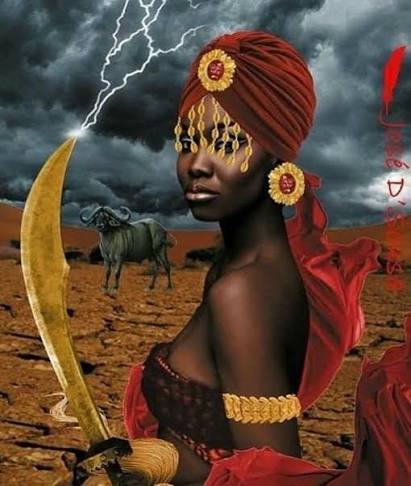
Among the great Òrìṣà of the Yoruba spiritual tradition, few embody change as completely as Ọya. She is the powerful guardian of movement, transition, renewal, and the forces that reshape both the natural world and human life.
Known as the ruler of powerful winds, storms, and the marketplace, Ọya is also closely associated with the River Niger, known in Yoruba tradition as Odò Ọya. Yet her significance extends far beyond nature. She represents the truth that nothing in life remains unchanged forever.
Her story is one of courage, power, sacrifice, and the acceptance of life's constant transformations.
Who Is Ọya?
In Yoruba cosmology, Ọya is one of the most dynamic and influential Òrìṣà.
She is associated with:
* Wind and storms * Change and transformation * Leadership and courage * The marketplace * Spiritual transition * Female power and independence
Unlike Òrìṣà associated with stability and preservation, Ọya governs movement. She is the force that sweeps away what has become stagnant and creates space for renewal.
For this reason, she is often viewed as the divine embodiment of transformation itself.
The Wife of Ṣàngó
Many Yoruba traditions describe Ọya as one of the wives of Ṣàngó, the powerful king who later became the Òrìṣà of thunder and lightning.
Their relationship symbolises the union of two immense forces of nature.
Ṣàngó represents fire, thunder, authority, and judgement.
Ọya represents wind, storms, change, and movement.
Together, they embody the tremendous energy of a storm.
Yet Ọya was never merely a companion to Ṣàngó. She possessed her own unique power and authority.
Many traditions portray her as a warrior, strategist, and leader in her own right.
The Gift of the Storm
According to popular oral traditions, Ọya received extraordinary powers that enabled her to command fierce winds and storms.
Some stories tell of her acquiring sacred knowledge that allowed her to transform herself into powerful natural forces.
Others describe her as learning mystical secrets that connected her to the movement of air, weather, and spiritual energy.
Through these powers, she became capable of clearing obstacles, reshaping landscapes, and bringing dramatic change wherever it was needed.
The storm became her symbol because storms transform everything they touch.
They destroy, but they also renew.
They uproot, but they also create opportunities for new growth.
The Keeper of the River
Ọya is closely connected to the River Niger, one of West Africa's most important waterways.
Like a river, she represents constant movement.
No river remains the same from one moment to the next.
Its waters flow continuously, carrying away the old and bringing the new.
This symbolism became central to her identity.
Just as rivers reshape the land over time, Ọya reshapes lives, communities, and destinies.
Her association with flowing water reinforces her role as a force of transformation and renewal.
The Guardian of the Threshold
One of Ọya's most important roles in Yoruba spirituality is her connection with transitions.
She is often regarded as a guardian of thresholds, the spaces between one state and another.
These transitions may include:
* Childhood to adulthood * Ignorance to wisdom * Failure to success * One season of life to another * Physical life to ancestral existence
In Yoruba thought, moments of transition are powerful and sometimes uncertain.
Ọya helps guide these passages.
She reminds people that growth often requires leaving behind what is familiar.
Her Connection to the Ancestors
Ọya is also closely linked to Ègúngún, the revered ancestral spirits.
Many traditions regard her as a guardian of the gateway between the living and the ancestors.
This connection strengthens her role as an Òrìṣà of transformation.
Death, in Yoruba philosophy, is not viewed simply as an ending. It is a transition from one state of existence to another.
Because Ọya governs transitions, she naturally became associated with this sacred passage.
Her role is not one of fear, but of guidance through change.
Why Transformation Is Her Sacred Duty
The stories surrounding Ọya reveal an important truth.
Life cannot grow without change.
Seeds must break open before they become plants.
Children must mature into adults.
Old ideas must sometimes be abandoned before new understanding can emerge.
Communities must adapt to survive.
Transformation is often uncomfortable, but it is necessary.
Ọya became the guardian of transformation because she represents this universal law.
She teaches that resisting every change leads to stagnation, while embracing necessary change leads to growth.
The Lessons of the Storm
The storms associated with Ọya carry profound lessons.
Change Is Unavoidable
Nothing remains exactly as it is forever.
Accepting this reality allows people to adapt more effectively.
Growth Often Requires Letting Go
New opportunities frequently require leaving old limitations behind.
Courage Is Essential
Transformation can be frightening.
Ọya teaches people to face uncertainty with bravery.
Renewal Follows Disruption
Storms may appear destructive, but they often prepare the way for new growth.
Movement Creates Progress
Remaining stagnant prevents development.
Progress requires action and change.
Ọya and Female Power
One of the reasons Ọya remains deeply respected is her representation of female strength and leadership.
She is not portrayed as passive or dependent.
Instead, she is:
* Courageous * Independent * Strategic * Intelligent * Powerful
Her stories challenge assumptions about power and leadership.
She demonstrates that wisdom, determination, and resilience are not limited by gender.
Ọya in the Yoruba Diaspora
The reverence for Ọya travelled across the Atlantic during the era of the transatlantic slave trade.
Today, she continues to be honoured throughout:
* Nigeria * Benin * Togo * Cuba * Brazil * Trinidad and Tobago * The United States
In traditions such as Lucumí and Candomblé, she remains one of the most respected Òrìṣà, recognised for her strength, courage, and transformative power.
Conclusion
The story of Ọya and her rise as the guardian of transformation is one of the most powerful narratives in Yoruba spirituality. Through her connection to storms, rivers, ancestors, and life's many transitions, she became the embodiment of change itself.
Her story teaches that transformation is not something to fear. It is an essential part of growth, renewal, and progress. Just as storms clear the air and rivers reshape the land, change reshapes human lives and creates opportunities for new beginnings.
Through Ọya, Yoruba tradition reminds us that every ending contains the seed of a new beginning, and that courage in times of change is one of the greatest strengths a person can possess.
She remains a timeless symbol of resilience, renewal, and the unstoppable force of transformation that moves through all existence.