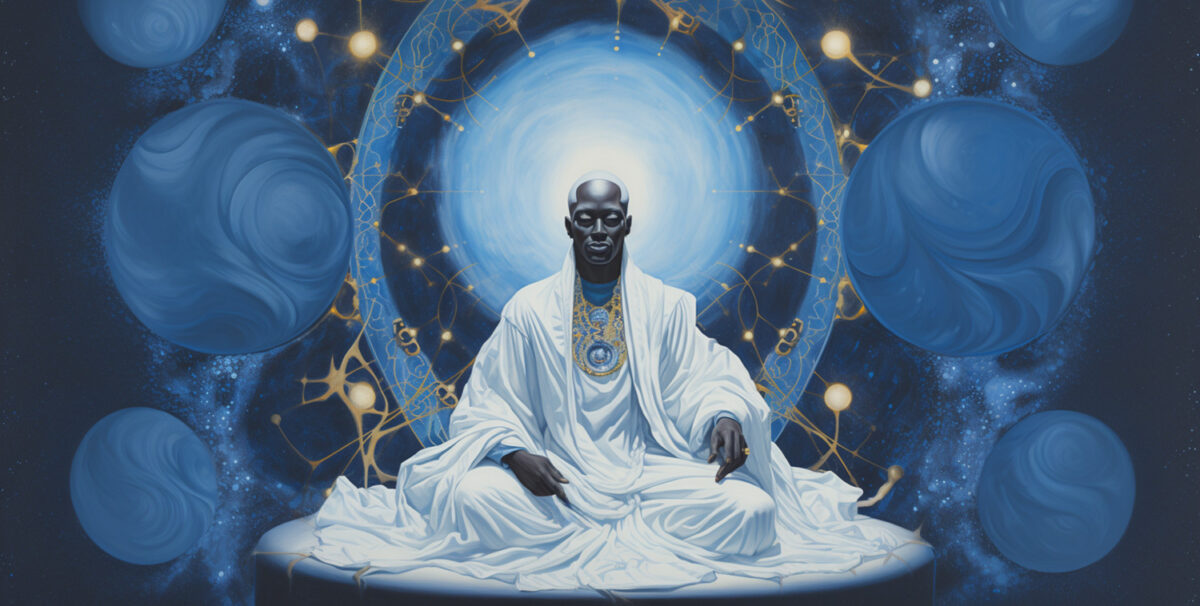
Among the most misunderstood aspects of Yoruba spirituality is the relationship between Olódùmarè, the Supreme Being, and the Òrìṣà, the divine forces through whom aspects of existence are governed. Over the centuries, outsiders have often described Yoruba religion as simply "the worship of many gods". Such descriptions fail to capture the depth and sophistication of Yoruba theology.
According to Ifá and Yoruba traditional belief, Olódùmarè and the Òrìṣà exist within a carefully ordered spiritual system. Olódùmarè is the ultimate source of all existence, while the Òrìṣà function as divine ministers, intermediaries, and custodians of various aspects of creation.
To understand Yoruba spirituality properly, one must first understand this sacred relationship.
Who Is Olódùmarè?
In Yoruba cosmology, Olódùmarè is the Supreme Being and the origin of all things.
Olódùmarè is known by several praise names, including:
* Olódùmarè * Ọlọ́run * Ẹlẹ́dàá, meaning "The Creator" * Aláṣẹ, meaning "The One who possesses ultimate authority"
Olódùmarè is understood to be:
* Eternal and without beginning * The creator of heaven and earth * Omnipotent and all knowing * The source of life and divine power * Beyond human limitation and full comprehension
Unlike human rulers, Olódùmarè has no rivals. No Òrìṣà challenges His authority, nor can any spiritual force exist independently of His will.
In Ifá verses, Olódùmarè is often portrayed as distant in majesty but intimately present through the life force that sustains creation.
Who Are the Òrìṣà?
The Òrìṣà are divine beings entrusted with specific responsibilities within the universe.
They are neither human nor equal to Olódùmarè. Rather, they serve as channels through which divine order operates.
The Òrìṣà oversee various aspects of existence, including nature, morality, justice, fertility, craftsmanship, healing, and wisdom.
Among the most well known are:
* Ọbàtálá, associated with purity, wisdom, and the moulding of humanity. * Ògún, associated with iron, labour, hunting, and innovation. * Ṣàngó, associated with thunder, leadership, and righteous judgement. * Yemoja, associated with motherhood, protection, and nurturing. * Òṣun, associated with beauty, fertility, diplomacy, and fresh waters. * Èṣù, the divine messenger who ensures that sacrifices and communication reach their proper destinations.
Each Òrìṣà has a distinct role, personality, symbolism, and body of sacred narratives.
The Òrìṣà Derive Their Authority from Olódùmarè
One of the central teachings of Ifá is that the Òrìṣà possess authority because Olódùmarè grants it to them.
They do not generate divine power independently.
Instead, they receive Àṣẹ, the sacred power that enables action and manifestation, from the Supreme Being.
Without Olódùmarè, there would be no Òrìṣà.
Without Àṣẹ, there would be no creation.
This relationship may be compared to a kingdom.
Olódùmarè is the sovereign source of authority, while the Òrìṣà function as trusted officials carrying out responsibilities within the cosmic order. However, this analogy has limits because Olódùmarè's authority is absolute and cannot be challenged.
Why Do People Approach the Òrìṣà?
This question has often led to misunderstanding.
If Olódùmarè is supreme, why do devotees interact with the Òrìṣà?
The answer lies in accessibility and divine function.
The Òrìṣà are understood to be closer to human affairs and are directly involved in the various aspects of life they govern.
People may seek the support of Ògún before beginning work involving metal, appeal to Òṣun in matters of fertility and prosperity, or honour Ṣàngó in the pursuit of justice.
Yet the ultimate source of blessing remains Olódùmarè.
Seeking the assistance of the Òrìṣà is not viewed as replacing the Supreme Being. Instead, it reflects participation in the divine structure established by Him.
The Role of Èṣù as Divine Messenger
Among the Òrìṣà, few have been as misunderstood as Èṣù.
Popular misconceptions, influenced by colonial interpretations, have wrongly equated Èṣù with the devil of Christian theology.
Traditional Yoruba belief presents a very different understanding.
Èṣù is:
* The divine messenger * The enforcer of spiritual law * The custodian of choice and consequence * The witness to sacrifice and prayer
Èṣù ensures that communication between Ayé and Ọ̀run is properly maintained.
He rewards sincerity and exposes deceit.
Rather than embodying evil, he represents accountability within the moral universe.
The Creation Narrative and Divine Cooperation
According to Ifá traditions, Olódùmarè entrusted certain Òrìṣà with the work of establishing the earth.
Among the most prominent figures in these narratives are:
* Ọbàtálá * Odùduwà
Through divine instruction and the authority granted by Olódùmarè, dry land emerged from primordial waters and life began to flourish.
These stories reveal a recurring principle within Yoruba spirituality.
Olódùmarè creates through delegation and cooperation.
Divine order is sustained through relationship.
Is Yoruba Religion Monotheistic or Polytheistic?
Scholars have debated this question for decades.
Some classify Yoruba religion as polytheistic because of the many Òrìṣà.
Others describe it as monotheistic because Olódùmarè occupies the highest and ultimate position.
Many Yoruba practitioners themselves understand their faith differently.
They see it as belief in one Supreme Being who governs through a network of divine forces.
This framework does not fit neatly into Western religious categories.
It reflects an indigenous African theological system with its own logic and structure.
What This Relationship Teaches About Life
The relationship between Olódùmarè and the Òrìṣà offers profound philosophical lessons.
It teaches that:
* Authority should be exercised with responsibility. * Power originates from a higher source. * Cooperation sustains order. * Diversity of function does not undermine unity. * Human beings thrive when they align themselves with divine principles.
Just as the Òrìṣà fulfil their responsibilities within creation, human beings are encouraged to discover and fulfil their own destinies with humility and integrity.
The Enduring Legacy of Yoruba Theology
The relationship between Olódùmarè and the Òrìṣà continues to shape the spiritual lives of millions of people across the world.
From Nigeria to Benin, from Cuba to Brazil, from Trinidad to the United States, Yoruba descendants and practitioners preserve this sacred understanding through ritual, storytelling, divination, music, and communal life.
Far from being a primitive belief system, Yoruba theology presents a sophisticated vision of reality in which transcendence and accessibility coexist.
Olódùmarè remains the Supreme Source of all existence.
The Òrìṣà continue to serve as divine custodians of the forces that sustain the universe.
Together, they reveal a worldview built upon balance, responsibility, relationship, and reverence.
Conclusion
At the heart of Yoruba spirituality lies a profound truth. There is one ultimate source of life and authority, Olódùmarè, who governs the universe through wisdom and divine order. The Òrìṣà are not rivals to that supreme authority but trusted agents who carry out specific functions within creation.
Understanding this relationship allows us to appreciate the depth of Yoruba thought beyond stereotypes and misconceptions. It reveals a theology that honours both the majesty of the Creator and the interconnectedness of all existence.
In the Yoruba worldview, heaven and earth remain linked through Àṣẹ, destiny unfolds through divine guidance, and every aspect of life reflects the wisdom of the One from whom all things came.