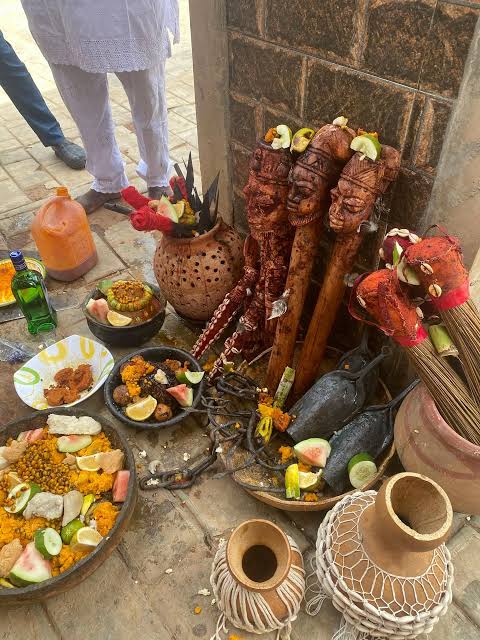
Introduction
Among the most profound figures in Yoruba spirituality is Ọbalúayé, a revered Òrìṣà whose story speaks about suffering, healing, humility, resilience, and transformation.
Often known by titles such as Bàbá Ilẹ̀, meaning "Father of the Earth," Ọbalúayé occupies a unique place in Yoruba religious thought. He is associated with the earth itself, with epidemics and disease, but also with recovery, restoration, and the wisdom that emerges from hardship.
His story is not simply about illness. It is about how adversity can transform a person's character and how compassion often grows from personal suffering.
Who Is Ọbalúayé?
In Yoruba tradition, Ọbalúayé is an ancient and powerful Òrìṣà connected with:
* The earth * Human mortality * Healing * Disease and recovery * Transformation * Compassion for the suffering
In different Yoruba communities and throughout the diaspora, he is known by various names and titles. In many traditions, he is closely connected with illnesses that historically affected communities, particularly infectious diseases that people struggled to understand before the development of modern medicine.
Because of this association, he became both feared and respected.
Yet Yoruba spirituality does not view him merely as a bringer of disease. He is equally recognised as a source of healing and protection.
The Child Marked by Suffering
One of the most widely known traditions tells of Ọbalúayé's difficult beginnings.
According to oral narratives, he was born with a severe skin condition that covered his body with sores and marks.
His appearance led many people to reject him.
Some accounts say that people avoided him.
Others say that he was ridiculed and excluded.
Wherever he went, he encountered judgement based on his outward appearance.
This suffering shaped the course of his life.
Unlike many powerful figures in mythology who begin their journeys with strength and privilege, Ọbalúayé's story begins with vulnerability.
Exile and Loneliness
As a result of his condition, Ọbalúayé is said to have lived in isolation.
He experienced loneliness.
He knew what it felt like to be misunderstood.
He understood pain not as an abstract concept but as a lived reality.
Yet instead of allowing bitterness to consume him, he developed wisdom.
His suffering taught him empathy.
Because he understood hardship, he became capable of understanding the suffering of others.
This is one of the central lessons of his story.
The deepest compassion often comes from those who have endured pain themselves.
The Great Festival
One of the most famous episodes in traditions about Ọbalúayé concerns a great gathering of the Òrìṣà.
A grand celebration was organised.
The most honoured divine beings were present.
Music filled the air.
People danced and rejoiced.
However, because of his appearance, Ọbalúayé was reluctant to attend.
He feared ridicule.
He feared rejection.
He feared being judged once again.
Despite these concerns, he eventually approached the gathering.
According to many versions of the story, he arrived covered from head to toe in raffia garments, concealing the marks on his body.
The Transformation
At the festival, something extraordinary happened.
As the celebration continued, divine intervention transformed Ọbalúayé.
In some versions of the story, Ọ̀ṣun plays a crucial role.
Through her compassion and spiritual power, the sores disappeared.
His body became radiant.
His hidden beauty was revealed.
Those who had once ignored or feared him were astonished.
The figure they had rejected became a symbol of dignity and power.
The transformation was not merely physical.
It represented the revelation of inner worth.
The lesson was clear.
A person's value cannot be measured solely by outward appearance.
The Meaning Behind the Story
Like many Yoruba sacred narratives, the story operates on multiple levels.
On the surface, it is a tale of suffering and healing.
On a deeper level, it teaches important truths about human life.
Judging by Appearance Is Dangerous
The story warns against evaluating people based solely on physical appearance.
Many individuals possess gifts, wisdom, and strength that may not be immediately visible.
Suffering Can Produce Wisdom
Hardship does not automatically make a person wiser, but it can create opportunities for growth, reflection, and compassion.
Dignity Exists in Every Human Being
Every person deserves respect regardless of their circumstances.
Healing Is Possible
Whether physical, emotional, or spiritual, healing remains possible even after periods of great difficulty.
Illness in Yoruba Thought
It is important to understand that traditional Yoruba perspectives on illness are complex.
Historically, communities sought to understand disease through a combination of:
* Spiritual interpretation * Herbal medicine * Communal support * Ritual practices * Observation of nature
Today, modern medicine provides scientific explanations for infectious diseases and many health conditions.
Nevertheless, traditional stories about Ọbalúayé continue to offer moral and philosophical insights about how individuals and communities respond to illness.
The stories are not medical textbooks.
They are teachings about resilience, empathy, and the human experience of suffering.
The Relationship Between Disease and Healing
One reason Ọbalúayé is so revered is that he embodies both affliction and restoration.
This dual role reflects a broader Yoruba understanding of balance.
The same force that reminds humanity of vulnerability also teaches the importance of healing.
As a result, Ọbalúayé became associated not only with epidemics but also with recovery and protection.
He reminds people that suffering and healing are often connected parts of the same journey.
Lessons for Modern Life
The story of Ọbalúayé remains relevant today.
It teaches us:
Compassion Matters
People facing illness or hardship need understanding rather than judgement.
Appearances Can Be Deceptive
External conditions rarely reveal the full truth about a person's character or potential.
Resilience Creates Strength
Difficult experiences can become sources of wisdom and growth.
Communities Must Support the Vulnerable
Healing often requires collective care and solidarity.
Hope Should Never Be Abandoned
Even in the darkest circumstances, transformation remains possible.
Ọbalúayé in the Yoruba Diaspora
The reverence for Ọbalúayé spread throughout the Americas during the era of the transatlantic slave trade.
Today, he continues to be honoured in traditions found in:
* Nigeria * Benin * Togo * Cuba * Brazil * Haiti * Trinidad and Tobago
In these communities, he remains a symbol of endurance, healing, humility, and spiritual power.
Conclusion
The story of Ọbalúayé is one of the most moving narratives in Yoruba spirituality. It begins with rejection and suffering but culminates in healing, dignity, and transformation.
His journey teaches that adversity does not define a person's worth. Instead, it can reveal hidden strength, deepen compassion, and create opportunities for renewal.
More than a story about illness, it is a story about humanity itself. It reminds us that every person carries struggles that may not be visible, and that kindness, empathy, and respect are among the most powerful forms of healing.
Through the wisdom of Ọbalúayé, Yoruba tradition offers a timeless lesson: those who have suffered deeply often possess the greatest capacity to understand, comfort, and heal others.